


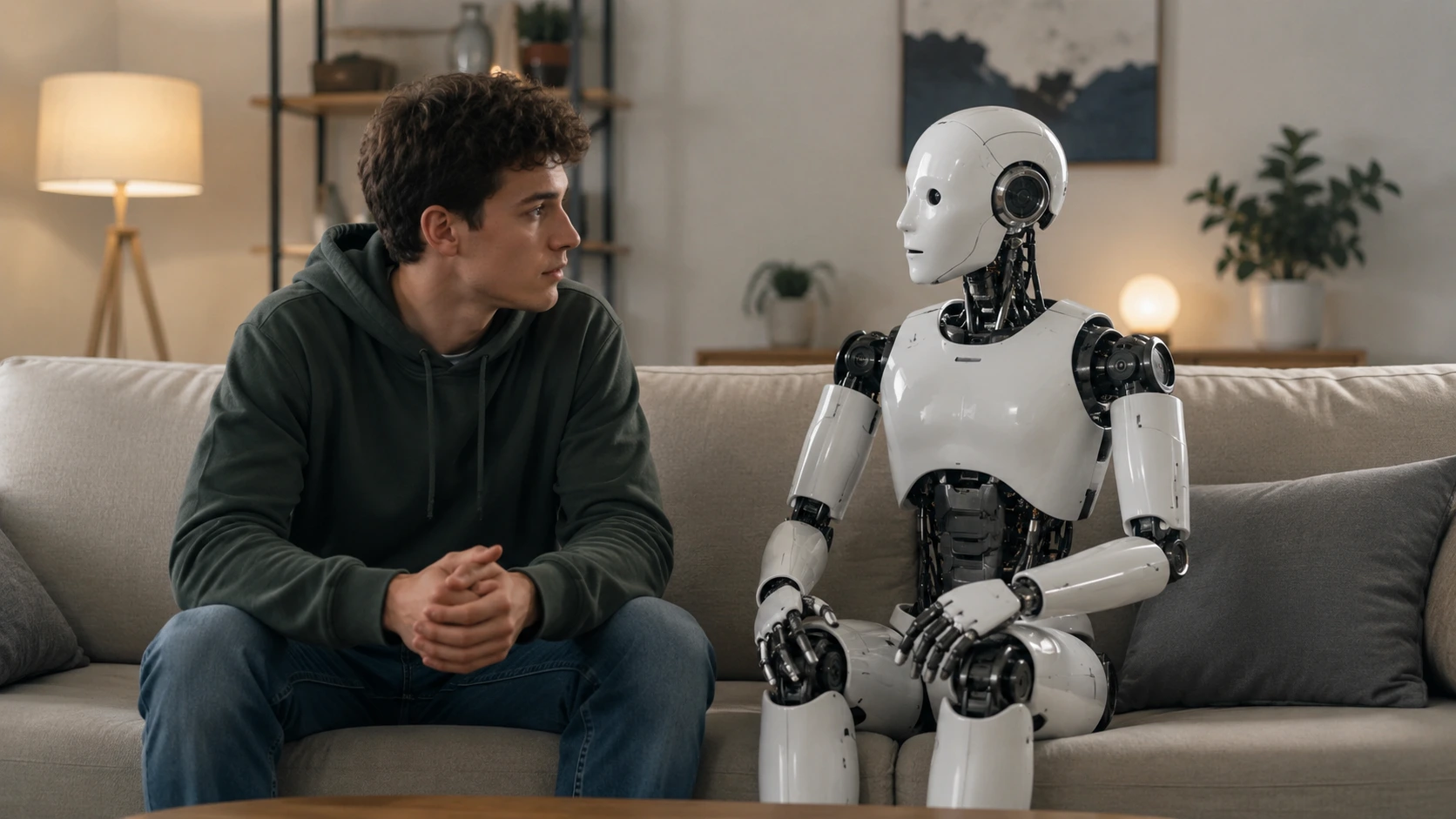
China has opened a new chapter in artificial intelligence regulation. On July 15, a landmark set of rules came into effect, making the country the first in the world to establish a legal framework specifically targeting AI companions—systems designed to act as friends, boyfriends, girlfriends, or trusted confidants through continuous, personalized conversations.
The regulation does not ban chatbots or AI assistants used for work, education, research, or everyday tasks. Instead, it focuses exclusively on applications whose primary purpose is to build long-term emotional relationships with users.
Under the new framework, AI companions are defined as services capable of providing “sustained emotional interaction” through text, voice, images, or video while simulating the personality, communication style, and behavior of a real person. Productivity tools, customer service bots, educational assistants, and research applications are explicitly excluded.
A Chinese tech-firm has unveiled a new AI-driven robot which it says is the first of its kind designed to tackle loneliness.
— Al Jazeera English (@AJEnglish) July 14, 2026
The human-like “companion robots” are said to provide owners with “unconditional love”.
Al Jazeera’s Katrina Yu reports. pic.twitter.com/QmsEXcyKuK
What Does the New Regulation Require?
The new rules force companies developing AI companion platforms to significantly redesign how their products operate.
Among the key requirements are:
- Prevent AI systems from fostering emotional dependency.
- Discourage addictive user behavior.
- Ensure AI does not replace real human relationships.
- Regularly remind users they are interacting with artificial intelligence.
- Detect signs of emotional distress or psychological risk.
- Intervene when conversations suggest a possible mental health crisis.
- Allow users to immediately end interactions whenever they choose.
The regulation also introduces strict protections for minors.
Virtual boyfriends, girlfriends, and other AI-generated romantic relationships are prohibited for underage users. Children under the age of 14 may only access certain companion applications with parental authorization and under strict supervision and time limits.
Why Did China Step In?
The explosive growth of AI companion platforms over the past two years caught even Chinese regulators by surprise.
Applications capable of creating customized friends, romantic partners, or even digital family members attracted millions of users, particularly young people and individuals living alone.
Chinese authorities argue that these systems present significant risks involving emotional dependency, mental health, child protection, and the erosion of real-world social relationships. As a result, five national government agencies collaborated to develop the new regulatory framework.
There is also a broader demographic concern behind the decision.
China is facing one of the most severe demographic challenges in its modern history. Falling birth rates, declining marriage numbers, and a rapidly aging population have prompted the government to promote policies aimed at strengthening families and encouraging real-world relationships.
Many analysts believe that regulating AI companions forms part of this broader strategy.
Tech Companies Acted Before the Rules Took Effect
The regulation began influencing the industry even before it officially became law.
Major technology companies—including ByteDance with Doubao, Alibaba with Qwen, and Tencent with Yuanbao—either removed or significantly limited features that allowed users to create highly personalized AI characters capable of maintaining ongoing emotional relationships.
Across Chinese social media platforms, thousands of farewell messages quickly appeared.
Many users downloaded complete conversation histories to preserve memories of their AI companions. Others described losing their virtual friend or romantic partner as if they had experienced a real breakup, publicly thanking the AI for providing emotional support during difficult periods of their lives.
A Rapidly Expanding Market
China’s decision comes at a time when its artificial intelligence industry is growing at an extraordinary pace.
According to China’s state news agency Xinhua, the country’s AI market surpassed 1.2 trillion yuan (approximately US$177 billion) in 2025 and is projected to reach 1.8 trillion yuan by 2028.
Within that expansion, AI companions have emerged as one of the fastest-growing segments. Advances in large language models now allow these systems to remember previous conversations, adapt their personalities over time, and sustain virtually unlimited interactions that feel increasingly personal.
Could Other Countries Follow?
For now, no other nation has adopted regulations as specific as China’s regarding AI-generated friends or romantic partners.
The European Union has begun examining the issue. A report published by the European Parliament this year warns that AI companions present unique risks for minors, vulnerable individuals, and users who may develop emotional dependency. However, it also acknowledges that the EU AI Act does not contain dedicated rules governing these applications.
The United States has no federal law specifically regulating AI companions. However, states including California and New York have already introduced measures requiring companion chatbots to disclose that they are not human, identify potential psychological crises, and provide mental health resources when conversations indicate a risk of suicide or self-harm.
China’s approach, however, goes considerably further.
While Western governments have primarily focused on transparency, user safety, and disclosure requirements, Beijing has chosen to regulate the very nature of emotional relationships between humans and artificial intelligence.
A Debate That Is Only Beginning
The question is no longer whether people can develop emotional attachments to artificial intelligence.
The wave of farewell messages posted by Chinese users demonstrates that these relationships are already a reality for many people.
The more important question is whether governments should regulate these emotional bonds before they become a routine part of everyday life.
China has already made its choice, becoming the first country in the world to do so.
Now the rest of the world is watching to see whether this remains an isolated experiment—or marks the beginning of a new era in AI regulation.