


Your resume is still the most important tool when applying for a job. While resume formats, designs, and hiring platforms have evolved over the years, one thing continues to make a difference: how candidates describe their experience.
Hiring professionals agree that one of the most common mistakes is filling a resume with generic adjectives that provide little real value. Words like proactive, dynamic, and responsible appear on thousands of resumes and have lost much of their ability to distinguish one candidate from another.
Today, recruiters spend only a few seconds scanning a resume during the initial review. In that short time, they are looking for concrete information: measurable results, responsibilities, technical skills, and evidence that quickly demonstrates the value a candidate can bring to an organization.
Instead of telling employers who you are, show them what you’ve accomplished.
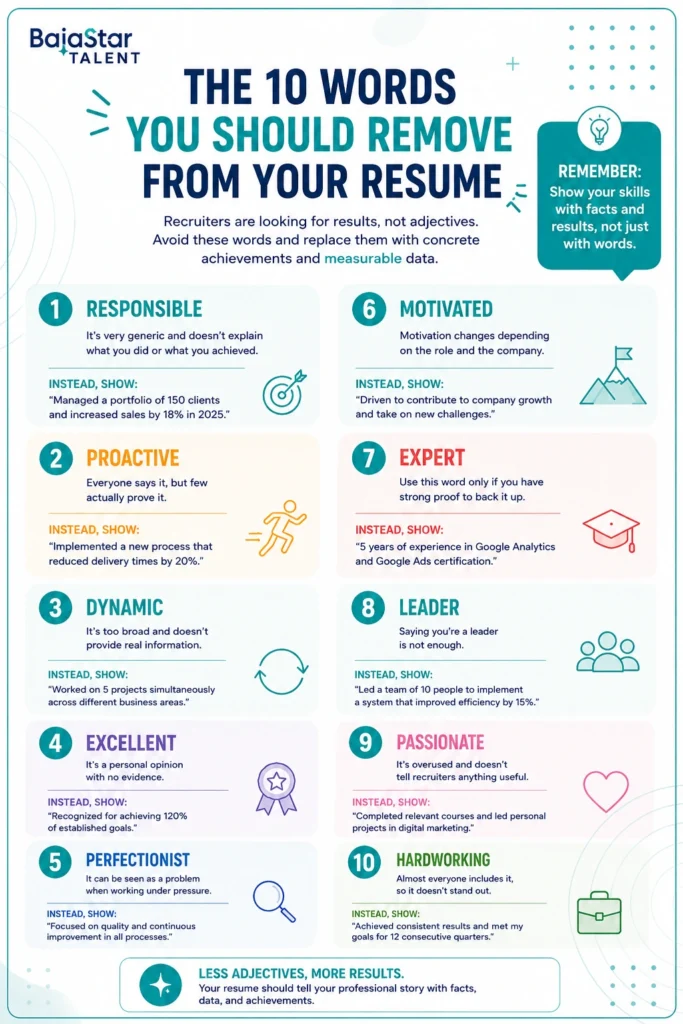
1. Responsible
This is probably one of the most overused words on resumes. Simply saying you’re responsible doesn’t explain what your role was or what you achieved.
Instead of writing:
“Responsible for the sales department.”
Try something like:
“Managed a portfolio of 150 clients and increased sales by 18% during 2025.”
Specific accomplishments are far more convincing than generic descriptions.
2. Proactive
Being proactive is an excellent quality, but simply claiming it doesn’t prove anything.
Instead, describe an initiative you led, a process you improved, or a problem you solved without being asked.
3. Dynamic
This adjective is too broad and can mean different things to different people.
If you’ve managed multiple projects at once, adapted to changing responsibilities, or successfully navigated organizational change, explain those experiences with concrete examples.
4. Excellent
Calling yourself an excellent professional doesn’t provide evidence.
Recruiters are much more interested in measurable results, awards, certifications, or performance achievements than in self-assessments.
5. Perfectionist
For years, this was considered a “safe” answer during job interviews and eventually became common on resumes.
Today, however, some hiring managers interpret it as a sign that someone may struggle with delegation or working under tight deadlines.
6. Motivated
Motivation matters, but it varies depending on the role and the organization.
Rather than saying you’re “highly motivated,” explain what drives your career, the type of work you enjoy, or the professional goals you’re pursuing.
7. Expert
Use this word only if you truly have the credentials to support it.
If you hold recognized certifications, have many years of specialized experience, or have led complex projects, the term may be appropriate.
Otherwise, describe your level of expertise and the tools, software, or technologies you work with.
8. Leader
Saying you’re a leader isn’t enough.
If you’ve supervised teams, trained employees, or managed projects, describe those experiences with measurable results.
For example:
“Led a team of 10 employees during the implementation of a new logistics system that reduced operating times by 15%.”
9. Passionate
Phrases like “passionate about technology,” “passionate about sales,” or “passionate about marketing” appear in countless professional profiles.
While they express enthusiasm, they don’t tell employers much.
Instead, demonstrate your interest through certifications, personal projects, continuing education, volunteer work, or relevant experience.
10. Hardworking
Almost every candidate considers themselves hardworking.
That’s exactly why the word no longer helps distinguish one applicant from another.
What recruiters really want to know is what you accomplished through your work.
What Recruiters Actually Want to See
Rather than a list of personality traits, hiring managers want to understand the impact you’ve made throughout your career.
Whenever possible, include measurable achievements such as:
- Sales growth
- Cost reductions
- Number of clients managed
- Team members supervised
- Projects successfully completed
- Years of experience with specific software or technologies
- Professional certifications
- Languages and proficiency levels
These details help recruiters evaluate your profile quickly and compare candidates more effectively.
Build a Resume Around Achievements
More companies than ever use Applicant Tracking Systems (ATS) to screen resumes before a recruiter even sees them. Once your resume reaches a hiring manager, it often receives only a brief initial review.
That’s why a clear, concise, achievement-focused resume has a much better chance of standing out.
Instead of filling your resume with adjectives, answer questions like:
- What did you accomplish?
- What problem did you solve?
- What measurable results did you achieve?
- How did you contribute to the business?
Those answers tell employers far more than any descriptive word ever could.
A strong resume doesn’t need exaggerated adjectives. It needs evidence. Replacing generic buzzwords with measurable accomplishments is one of the simplest ways to strengthen your resume and improve your chances of landing an interview.
Remember, every step of the hiring process matters—and we’re here to help. Whether you’re updating your resume, preparing for interviews, or planning your next career move, BajaStar Talent is ready to support you.