


At a FIFA World Cup, players are competing against much more than the team on the other side of the field. They carry the expectations of millions of fans, the responsibility of representing their country, constant media attention, and the reality that a single mistake can end an entire tournament.
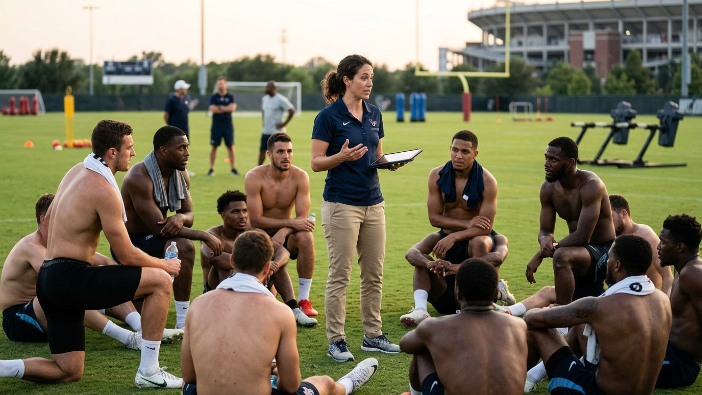
That is why nearly every national team now includes sports psychologists or mental performance specialists as part of its coaching staff. Their role goes far beyond delivering motivational speeches before kickoff. They help players, coaches, and entire squads manage pressure, build confidence, improve communication, and maintain peak performance when the stakes are highest.
What Does a Sports Psychologist Do?
A sports psychologist focuses on the mental and emotional factors that directly influence performance. During a World Cup, that may involve helping players control anxiety before a decisive match, maintain concentration throughout the game, recover emotionally after a defeat, or prepare mentally for a penalty shootout.
Another essential responsibility is creating effective performance routines. Many elite athletes follow specific pre-game habits because they reduce uncertainty, improve focus, and provide a sense of control. Sports psychologists work with players to develop routines tailored to their individual needs and transform them into practical performance tools.
They also play an important role in team dynamics. National squads bring together athletes from different clubs, coaching philosophies, cultures, leadership styles, and personal circumstances. In just a few weeks, these players must build trust, accept different roles, and perform as one unit. Sports psychologists help prevent conflict, strengthen communication, and create a cohesive team environment.
Do All World Cup Teams Have One?
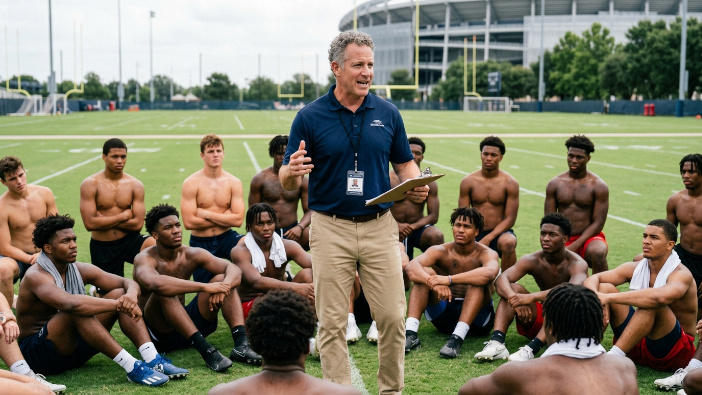
Today, most elite national teams receive some form of psychological or mental performance support. In some organizations, a licensed sports psychologist is a permanent member of the coaching staff. Others rely on performance coaches, leadership consultants, mental health professionals, or multidisciplinary performance teams.
The trend is unmistakable. Modern football no longer views success as simply a matter of tactics and physical conditioning. Teams now invest in nutritionists, sleep specialists, performance analysts, sports scientists, physicians, and experts dedicated to mental performance.
The objective is simple: reduce the margin for error and prepare athletes to perform under extraordinary pressure.
At the World Cup, victory and defeat are often separated by a single decision, a momentary lapse of concentration, or an emotional reaction. Training the mind has become just as important as training the body.
Pressure Can Be Trained
One of the biggest myths in elite sports is that top athletes do not experience pressure. They absolutely do.
The difference is that they learn how to manage it.
Pressure never disappears. It becomes something that can be understood, controlled, and used as an advantage.
Even players accustomed to competing in Europe’s biggest leagues experience a different emotional challenge at the World Cup. They are no longer playing only for a club. They represent an entire nation, its history, its supporters, and enormous public expectations.
Sports psychologists help athletes channel that pressure into focus, energy, and disciplined decision-making. They also teach players how to recover quickly from mistakes. In high-level competition, bouncing back after an error can be just as valuable as technical ability.
What Businesses Can Learn
Although the environment is different, companies face many of the same challenges.
A CEO presenting to investors, a manager making a difficult decision, a sales team facing aggressive targets, or an organization navigating transformation all require people who can perform under pressure.
The parallels between sports and business have never been clearer.
Both demand preparation, discipline, communication, trust, emotional intelligence, and adaptability.
Like elite athletes, business leaders must manage stress, remain focused, make sound decisions under pressure, recover from setbacks, and inspire confidence within their teams.
That is why many organizations are adopting practices once associated almost exclusively with professional sports, including executive coaching, behavioral assessments, leadership development, emotional wellness programs, and soft skills training.
Talent Alone Is Not Enough
The World Cup demonstrates an important lesson that applies equally to business.
The teams that advance the furthest are not always those with the most talented individuals. They are often the teams that perform best under pressure.
Organizations face the same reality. Hiring experienced professionals is essential, but identifying people with resilience, collaboration skills, leadership potential, and emotional stability is equally important.
Two candidates may have nearly identical technical qualifications, yet the deciding factor can be how they respond to conflict, communicate during difficult moments, or maintain performance when circumstances change.
For employers, that raises an important question:
Are you evaluating only résumés, or are you also assessing a candidate’s ability to lead under pressure?
A Broader View of Performance
The growing presence of sports psychologists at the World Cup reflects a broader shift in how performance is understood.
Success is no longer measured only by what people know or what they can do. It is also measured by how they respond when everything is on the line.
In football, that may mean taking the decisive penalty kick.
In business, it may mean leading a critical negotiation, reorganizing a team, navigating a crisis, or making a strategic decision with significant consequences.
In both situations, mindset matters.
That is why the world’s top national teams no longer leave mental performance to chance. They develop it, integrate it into their culture, and treat it as a competitive advantage.
Organizations seeking long-term success would be wise to do the same. Finding talented professionals is important—but developing leaders who can thrive under pressure is what ultimately separates exceptional teams from the rest.