


This decision reflects a broader trend in corporate America, where numerous companies have been scaling back their DEI commitments. Claims of reverse discrimination are becoming more frequent.

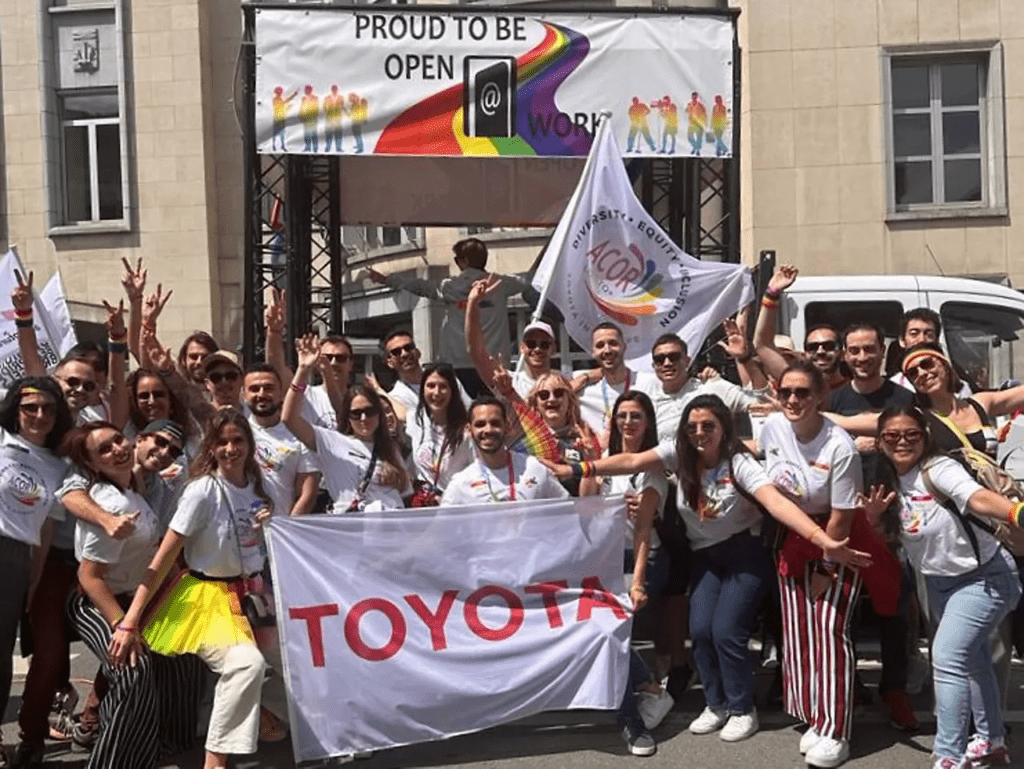
Toyota has become the latest major company to reduce its involvement in diversity, equity, and inclusion (DEI) efforts, following mounting pressure and claims of reverse discrimination. As reported by Bloomberg, the automaker will no longer sponsor LGBTQ+ events and will instead focus its community activities on STEM education and workforce readiness.
This decision reflects a broader trend in corporate America, where numerous companies have been scaling back their DEI commitments. According to Bloomberg, conservative activists like Robby Starbuck have played a key role in this pushback. Starbuck recently criticized Toyota on social media for its DEI policies, specifically its support for LGBTQ+ employees, and encouraged customers to express their concerns to the company. While Toyota initially indicated that the impact of Starbuck’s post was minimal, it has since made significant changes to its DEI approach.

Bloomberg also reported that Toyota plans to withdraw from the Corporate Equality Index, a widely regarded ranking by the Human Rights Campaign that evaluates companies based on their inclusivity toward LGBTQ+ employees. In a letter to employees and dealers, Toyota attributed the shift to the “highly politicized” nature of corporate DEI discussions.
Toyota’s decision mirrors actions taken by other major corporations such as Harley-Davidson, Lowe’s, and Ford, all of which have recently rolled back their DEI policies and ceased participation in LGBTQ+ support initiatives. According to Bloomberg, these changes have been driven by legal and public pressure following the U.S. Supreme Court’s 2023 decision to overturn affirmative action. This ruling has prompted conservative activists to file lawsuits challenging DEI initiatives, often on the grounds of reverse discrimination.
As Bloomberg notes, many companies had already started to reduce their DEI programs before the affirmative action ruling. However, concerns over potential litigation have accelerated these efforts. In this climate, companies like Toyota are becoming more susceptible to campaigns aimed at dismantling DEI efforts, contributing to a broader rollback of corporate commitments to inclusivity.
While the debate around DEI remains polarized, Bloomberg emphasizes that the landscape of corporate America is shifting. Toyota’s recent actions highlight the increasing vulnerability of companies facing political and legal pressures, with more corporations expected to reassess their DEI strategies in response to these changes.
What is reverse discrimination?
Reverse discrimination refers to the perceived unfair treatment of members of a majority or historically advantaged group, often in response to policies aimed at correcting past injustices or promoting diversity.
These policies, such as affirmative action or diversity, equity, and inclusion (DEI) initiatives, are designed to increase opportunities for underrepresented or marginalized groups, but critics argue that they can sometimes lead to bias against majority groups
. In the context of employment, education, or other areas, reverse discrimination is claimed when individuals from majority groups believe they are being unfairly overlooked or treated unequally due to efforts to promote inclusion and diversity.