

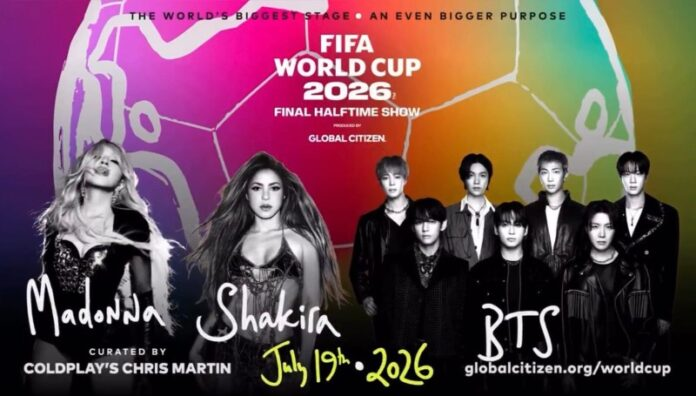
The 2026 FIFA World Cup will already make history as the first tournament hosted by three countries — the United States, Mexico and Canada — but it will also introduce something completely new to international football: a Super Bowl-style halftime show during the final match.
For this unprecedented debut, FIFA selected three of the biggest names in global music: Shakira, Madonna and BTS.
The final will take place on July 19, 2026, at MetLife Stadium in New Jersey, one of the most iconic sports venues in the United States. Millions of viewers around the world are expected to tune in not only for the match itself, but also for what could become one of the most watched musical performances in sports history.
A creative twist that changes football tradition
FIFA’s decision represents a bold and creative transformation for the World Cup. For decades, World Cup finals followed a traditional format focused entirely on the game, with short halftime breaks and minimal entertainment.
Now, FIFA appears ready to turn halftime into a global entertainment experience.
The move strongly resembles the NFL Super Bowl model, where the halftime performance evolved into a cultural phenomenon capable of generating as much attention as the championship game itself. By introducing this concept to football, FIFA is clearly aiming to modernize the tournament and connect with younger digital audiences and social media consumers.
Entertainment industry analysts believe the halftime show could become one of the World Cup’s most valuable marketing assets in the coming years.
Shakira returns as the voice of the World Cup
Shakira’s participation carries strong symbolic value for international football fans. The Colombian superstar became permanently linked to the World Cup after the global success of “Waka Waka (This Time for Africa),” the official song of the 2010 FIFA World Cup in South Africa.
Since then, she has remained closely associated with major football events and Latin American audiences worldwide. Her inclusion also highlights the enormous cultural and commercial influence that Latin America will have during the 2026 tournament.
FIFA seems to be betting on nostalgia, global recognition and emotional connection with millions of fans who grew up associating Shakira’s music with football’s biggest stage.
Madonna brings legendary pop power
Madonna represents another dimension of the show: global pop legacy. The American singer remains one of the most influential artists in music history and continues to attract audiences across generations.
Her participation reinforces the international scope of the event and helps position the halftime show as a crossover entertainment spectacle rather than simply a sports performance.
FIFA appears to be strategically combining contemporary stars with iconic artists capable of appealing to a worldwide audience.
BTS highlights the global rise of K-pop
The inclusion of BTS reflects the growing power of Asia within the global entertainment industry. The South Korean group not only transformed K-pop, but also redefined how artists interact with digital audiences.
With millions of highly engaged fans across social media and streaming platforms, BTS is expected to bring enormous online visibility to the World Cup final.
Sports marketing experts believe the group’s digital influence could turn the halftime show into one of the most discussed events on the internet in 2026.
A halftime show with a social impact
The show will be produced by Global Citizen, the international nonprofit organization focused on fighting extreme poverty and expanding educational opportunities worldwide. Coldplay frontman Chris Martin will also participate in the production of the event.
FIFA confirmed that the halftime show will support the FIFA Global Citizen Education Fund, an initiative aiming to raise US$100 million to expand access to education and football programs for children around the world.
According to FIFA, US$1 from every ticket sold during the tournament will be donated to the fund.
Debate over halftime length already begins
The announcement has also sparked debate within the football world. Official football regulations state that halftime breaks should not exceed 15 minutes, which differs significantly from the extended halftime format used during the Super Bowl.
So far, FIFA has not clarified whether it plans to extend halftime during the final to allow enough time for stage construction and performance logistics.
Still, many experts believe the organization will likely adapt the format due to the scale and commercial importance of the event.
FIFA wants the 2026 World Cup to break every record
The 2026 FIFA World Cup will also be the first edition featuring 48 national teams, dramatically increasing the number of matches, host cities and fans involved.
FIFA expects the tournament to break historic records in audience numbers, sponsorship revenue and digital engagement.
The organization recently confirmed that reggaeton superstar J Balvin will headline the opening ceremony in Mexico City alongside Alejandro Fernández, Belinda, Danny Ocean, Lila Downs, Los Ángeles Azules, Maná and Tyla.
Everything suggests music will play a larger role than ever before during the tournament.
The first halftime show in World Cup final history will not simply be a concert. It will be a test of how FIFA envisions the future of the world’s biggest sporting eve