


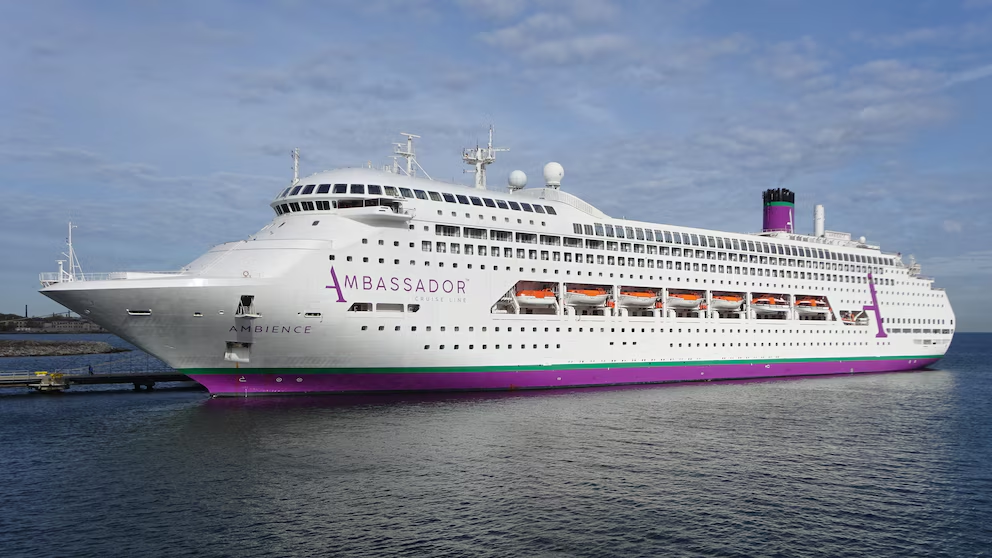
What was meant to be a peaceful getaway turned into a tense situation for more than 1,700 passengers and crew members aboard a cruise ship docked in Bordeaux, France. French health authorities ordered the vessel into confinement after the death of a 90-year-old passenger and the appearance of dozens of cases compatible with norovirus.
The incident once again raised alarms over a recurring issue affecting the cruise industry: viral outbreaks in enclosed environments where thousands of people live, eat, and share common spaces for days or even weeks.
And for many American workers — including remote employees, logistics operators, bilingual professionals, and hybrid workers — the idea of taking a vacation is increasingly colliding with an uncomfortable reality: even the most exclusive destinations can quickly become hotspots for highly contagious diseases.
What Happened on the Cruise Ship in France
The ship, operated by Ambassador Cruise Line, had departed from the Shetland Islands and made stops in Belfast, Liverpool, and Brest before arriving in Bordeaux. Most passengers onboard were British and Irish travelers. Around 50 people began showing severe gastrointestinal symptoms, including vomiting and intense diarrhea.
Although initial tests did not officially confirm the presence of norovirus, French authorities activated health protocols due to the suspicion of an infectious outbreak.
The company intensified cleaning and disinfection procedures, implemented restaurant restrictions, and increased onboard medical monitoring while investigations continued.
The situation is far from isolated. In fact, cruise ships remain one of the environments most vulnerable to this type of contagion.
Why Cruise Ships Favor Outbreaks
Public health experts have warned for years that cruise ships combine almost all the ideal conditions for viral spread:
- Thousands of people sharing confined spaces.
- Communal dining areas and buffets.
- Constant contact with surfaces.
- Continuous rotation of passengers and crew.
- Closed ventilation systems.
- International stops with exposure to multiple health risks.
Norovirus, in particular, is extremely contagious. It can spread through contaminated food, surfaces, direct contact, and can even remain active for days. A minimal exposure is enough to trigger massive chains of transmission.
Symptoms typically include:
- Severe vomiting.
- Watery diarrhea.
- Nausea.
- Abdominal pain.
- Severe dehydration in elderly or vulnerable individuals.
While most cases resolve within a few days, older adults or people with underlying conditions can develop serious complications.
The Previous Incident Still Raising Concerns: Hantavirus
The current fear also revives memories of another recent episode that generated major international attention: the health emergency triggered after a suspected hantavirus case aboard the cruise ship MV Hondius near the Canary Islands.
That case forced authorities to activate emergency protocols, controlled evacuations, and intensive epidemiological monitoring.
Hantavirus is far less common than norovirus — but significantly more dangerous. Unlike the gastrointestinal viruses typically associated with cruise ships, hantavirus can cause severe pulmonary syndrome with a high mortality rate.
The disease is usually transmitted through contact with droppings, saliva, or urine from infected rodents. In rare cases — depending on the strain — person-to-person transmission may occur.
Although cruise ships are not the classic environment for hantavirus transmission, the case created a strong media impact because it demonstrated how even rare diseases can completely disrupt international tourism operations.
The Cruise Industry Faces a New Challenge
After the COVID-19 pandemic, cruise companies invested millions in health protocols, ventilation systems, medical monitoring, and epidemiological controls.
Yet outbreaks continue to occur.
Part of the issue is that cruise ships operate essentially as floating cities. Once a highly contagious virus appears onboard, containing it becomes extremely difficult.
In addition, many passengers continue traveling despite mild symptoms to avoid canceling expensive vacations, further increasing the spread.
International health authorities are also facing another challenge: the record-breaking growth of post-pandemic tourism. Travel volumes have surged again, and ports are receiving thousands of passengers every day.
When Vacations End Worse Than Work
For many American workers — especially those under constant professional pressure — vacations represent the only real opportunity to disconnect.
But recent health incidents are creating an increasingly common phenomenon: travelers returning sick, isolated, or even trapped in international quarantines.
That impacts not only personal health, but also:
- Delayed returns to work.
- Financial losses.
- Psychological stress.
- Medical leave complications.
- Disruptions to remote projects.
- Difficulties resuming operations from other countries.
In high-pressure industries such as logistics, customer service, technology, or bilingual support, an unexpected absence can create significant operational challenges for entire teams.
What Experts Recommend Before Traveling
With outbreaks increasing on cruise ships and in major tourist destinations, specialists recommend:
- Checking health alerts before boarding.
- Avoiding travel if gastrointestinal symptoms appear.
- Maintaining constant hand hygiene.
- Avoiding raw or undercooked foods.
- Purchasing international medical insurance.
- Reviewing the cruise company’s health protocols.
- Carrying basic emergency medications.
Experts also advise paying close attention to recent disease reports involving specific ports or cruise vessels.
Because what should be a relaxing week away can quickly turn into isolation, hospitals, cancellations… and an unforgettable nightmare.