

For decades, the New York Knicks represented frustration, instability, and endless rebuilding projects. Yet in May 2026, the franchise achieved what once seemed impossible: returning to the NBA Finals after 27 years following a dominant 4-0 sweep over the Cleveland Cavaliers and an incredible 11-game playoff winning streak.
While the sports world focused on the results, another conversation quietly emerged around the Knicks’ transformation — one that resonates deeply with Human Resources professionals and business leaders.
In an era where companies are searching for ways to improve productivity, engagement, and resilience, the Knicks have become a powerful example of how organizational culture can transform individual talent into collective excellence.
The Empire State Building immediately changes to Knicks colors after they clinch their first NBA Finals berth since 1999 🧡💙 pic.twitter.com/Sk527hxPdY
— Omar Raja (@OmarESPN) May 26, 2026
When Individual Talent Is Not Enough
In professional sports, just like in business, assembling talented individuals does not automatically guarantee success. Many organizations are filled with brilliant professionals and still struggle with communication, execution, or internal alignment.
The Knicks appear to have found the opposite formula: a system where every member clearly understands their role and works to elevate the group as a whole.
Karl-Anthony Towns, Jalen Brunson, OG Anunoby, Mikal Bridges, and Landry Shamet all delivered impressive performances during the decisive series against Cleveland. Yet the most important aspect was not the statistics themselves, but the way the team functioned collectively.
For HR departments, this reflects one of the biggest modern challenges: moving away from the “star employee” mentality toward sustainable collaboration models.
Today’s organizations no longer depend solely on exceptional individual performers. They need teams capable of adapting quickly, communicating efficiently, and maintaining performance under constant pressure.
BREAKING: FOR THE FIRST TIME IN 27 YEARS, THE NEW YORK KNICKS ARE GOING TO THE NBA FINALS 🚨 pic.twitter.com/K9U6bJ1sSP
— NBACentral (@TheDunkCentral) May 26, 2026
Trust as an Invisible Asset
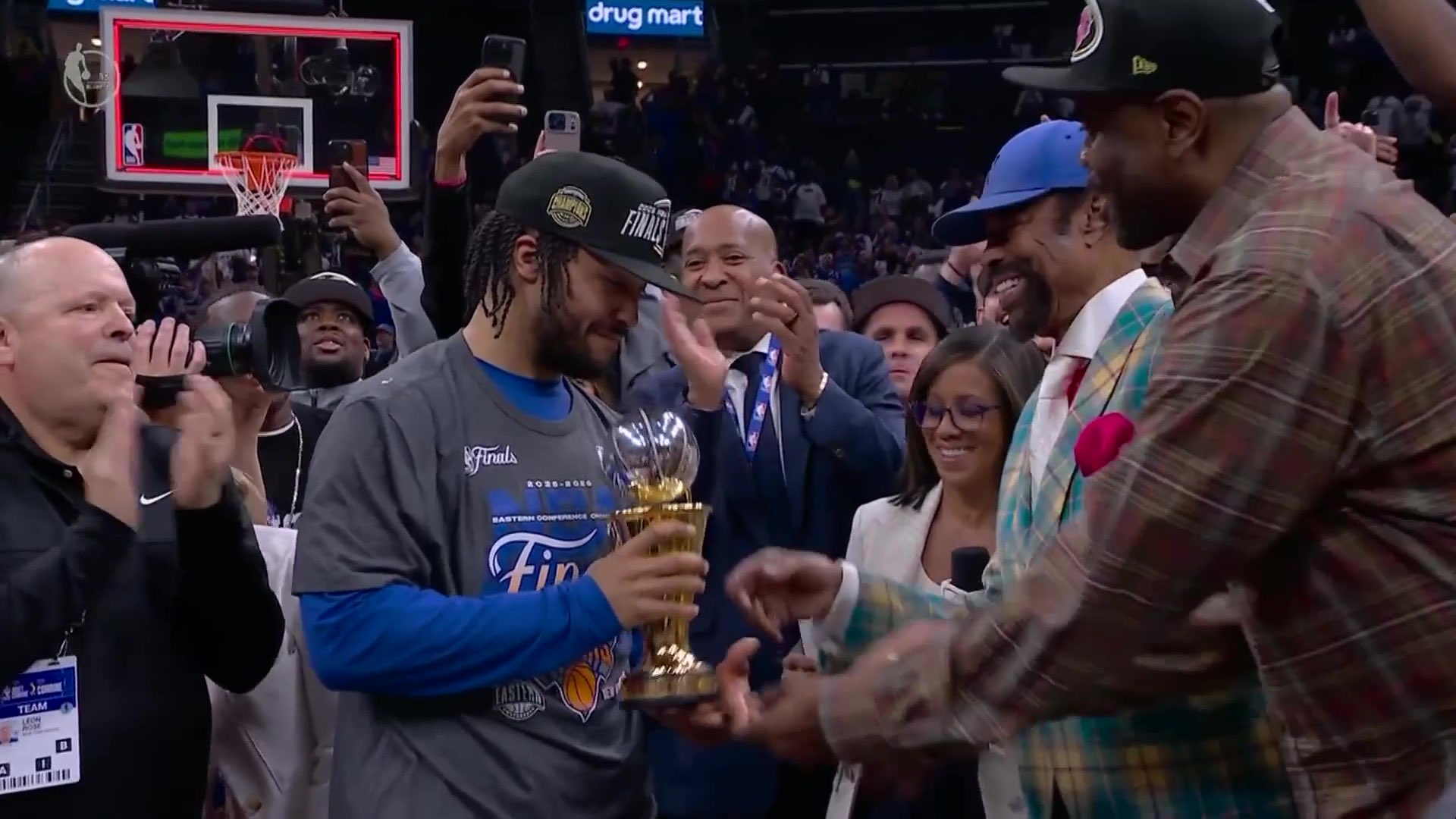
One of the most revealing moments came from Jalen Brunson, who was named Eastern Conference Finals MVP. After the series-clinching victory, Brunson summarized the team’s success with a simple statement:
“We all trust each other from top to bottom.”
In basketball terms, it sounds emotional. In organizational terms, it is almost a perfect definition of a healthy corporate culture.
Today, many companies invest millions in technology, automation, and artificial intelligence while still struggling with turnover, burnout, internal conflict, and low engagement. Leadership studies consistently show that trust remains one of the strongest drivers of productivity and innovation.
When teams trust each other, several key behaviors emerge naturally:
- greater autonomy,
- reduced fear of failure,
- stronger communication,
- faster decision-making,
- and lower emotional exhaustion.
The Knicks have built exactly that type of environment: one where players feel secure enough to take responsibility without relying entirely on a single dominant figure.
Leadership That Elevates the Team
Another fascinating aspect of the Knicks’ story is the role of head coach Mike Brown, who reached the NBA Finals in his very first season with the organization.
In the corporate world, this connects directly to one of the most important leadership debates today: the shift from controlling managers to empowering leaders.
Traditional hierarchical structures are increasingly losing effectiveness compared to more collaborative models, where leadership is less about centralizing authority and more about creating the conditions for teams to succeed.
Modern coaches no longer focus only on tactics. They manage emotions, communication, group identity, and collective motivation — exactly like today’s most effective business leaders.
The Knicks demonstrate a form of leadership centered not on individual ego, but on building a shared identity.
Resilience and Process Culture
Another important element is that the Knicks’ journey was far from perfect. In the first playoff round, they were close to elimination against Atlanta and even trailed the series 1-2 before recovering.
That detail matters greatly from an HR perspective because it highlights organizational resilience.
Modern companies operate in increasingly unstable environments shaped by:
- rapid technological change,
- economic pressure,
- information overload,
- hybrid work models,
- and growing difficulties in sustaining long-term motivation.
In this context, success often depends less on avoiding crises and more on recovering quickly while maintaining internal cohesion.
Collective resilience is built before crises occur, not during them. And that depends directly on organizational culture.
The Return of an Identity
Perhaps the most symbolic part of the Knicks phenomenon is emotional rather than tactical. New York waited nearly three decades for this moment. The franchise once again became more than just a basketball team — it became a shared identity.
The same dynamic exists inside successful companies.
Strong organizations do not operate only through salaries or benefits. They thrive because employees feel a sense of belonging, purpose, and connection to something larger than their daily responsibilities.
That may be the biggest lesson behind the Knicks’ historic comeback: extraordinary teams are not created solely through strategy or talent. They emerge when culture aligns people, sustains trust, and transforms individual goals into a collective mission.
The Knicks are back in the NBA Finals. But for the world of Human Resources, their greatest achievement may be proving that even after decades of frustration, an organization can rebuild itself when it recovers its culture, identity, and internal trust.