


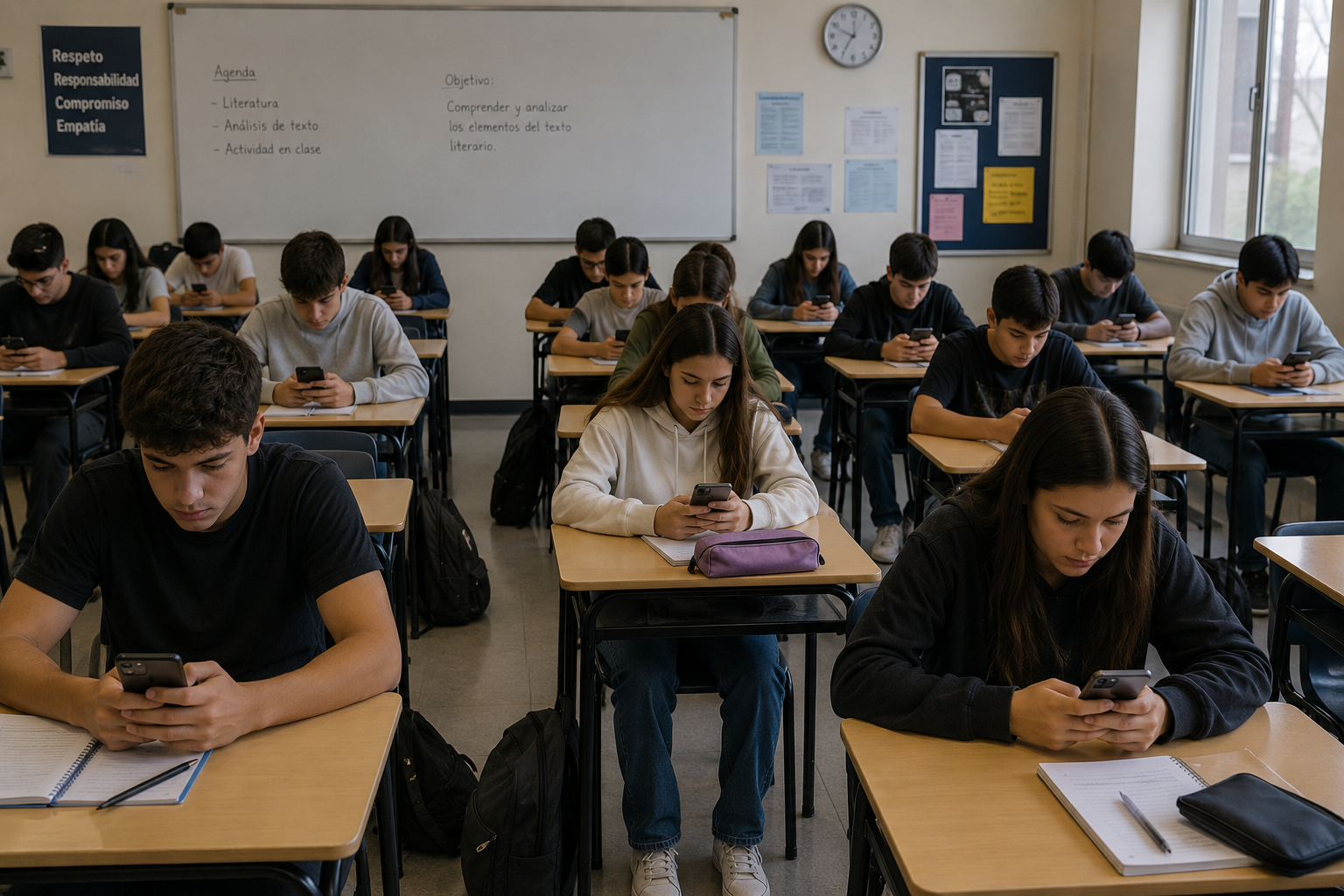
For years, technology was presented as one of the greatest solutions for modernizing education. Computers, tablets, digital platforms, interactive apps, and constant internet access promised to transform how students learn and prepare for the future.
Today, however, a question that would have seemed unthinkable just a decade ago is gaining momentum across the United States: could excessive screen time actually be harming learning instead of improving it?
The discussion returned to the spotlight after the Federal Communications Commission (FCC) launched a comprehensive review of the E-Rate program, a federal fund that provides approximately $3 billion annually to support internet services in schools and libraries nationwide.
The program has existed for nearly three decades and was originally created to ensure students and teachers had access to reliable connectivity. But policymakers are now asking whether today’s educational environment differs dramatically from that of the 1990s and whether increasing screen exposure may be creating unintended consequences.
Growing Concerns About Academic Performance

FCC Chairman Brendan Carr recently pointed to emerging research suggesting a possible connection between excessive classroom screen use and declining educational outcomes.
These concerns are not based on a single study. Reading and mathematics scores across the United States have experienced significant declines in recent years. According to the National Assessment of Educational Progress (NAEP), often referred to as “The Nation’s Report Card,” many students are performing at some of the lowest levels seen in decades.
Of course, few experts argue that screens are the sole cause. The effects of the pandemic, mental health challenges, family dynamics, and broader social changes all play important roles.
Nevertheless, an increasing number of researchers are investigating whether constant digital connectivity may be affecting essential cognitive skills such as concentration, memory retention, reading comprehension, and complex problem-solving.
Attention: The Most Valuable Resource of the 21st Century
One of the primary concerns raised by education specialists is the fragmentation of attention.
When students study on internet-connected devices, they are constantly competing with notifications, videos, social media platforms, messages, and countless digital distractions specifically designed to capture their focus.
The human brain did not evolve to process an endless stream of interruptions.
Numerous neuroscience studies have suggested that continuously switching between tasks can reduce the ability to engage in deep, focused work—a skill that is becoming increasingly valuable in both education and the workplace.
Ironically, in an economy where information is available everywhere, the real competitive advantage may be the ability to maintain sustained attention over long periods of time.
The Goal Is Not to Eliminate Technology
The current debate is not about returning to chalkboards and textbooks alone, nor is it about banning digital devices.
Technology remains an extraordinary tool when used effectively.
The internet provides access to world-class university courses, global collaboration opportunities, language learning resources, technical training, and virtually unlimited information.
The challenge emerges when technology shifts from being a tool that supports learning to becoming the center of the entire educational experience.
Many school districts across the United States have already begun reducing device usage in early grades while reintroducing traditional activities such as reading printed materials, handwriting exercises, and screen-free classroom periods throughout the day.
What Employers Are Looking For
The conversation extends far beyond education.
At BajaStarTalent, we are seeing companies place increasing value on skills that are difficult to develop through constant digital consumption alone.
These include:
- Critical thinking
- Analytical reasoning
- Problem-solving abilities
- Effective communication
- Reading comprehension
- Creativity
- Sustained concentration
- Independent work skills
Interestingly, these are the same competencies that many educators believe may be weakened by excessive digital stimulation.
Employers are not simply looking for people who know how to use apps or navigate software platforms. They are seeking professionals who can evaluate complex information, make sound decisions, communicate clearly, and adapt to rapidly changing environments.
Technical knowledge matters, but the ability to think deeply remains one of the most valuable skills in today’s labor market.
The Role of Parents
Another important element of the discussion involves parental oversight.
Many parents set limits on device usage at home but may not fully realize how much time their children spend in front of screens during the school day.
As part of its review of the E-Rate program, the FCC has indicated that it wants to improve transparency and provide families with better information regarding how publicly funded technology is being used in educational settings.
The objective is not to demonize the internet. Rather, it is to better understand how technology is being used and what effects it may have on the cognitive development of children and adolescents.
A Question That Is Only Beginning
For years, educational discussions focused on how to bring more technology into classrooms.
Today, the conversation appears to be shifting.
The question is no longer how many screens can be added to education, but what balance should exist between technology, learning, and human development.
In an increasingly digital world, technological literacy will remain essential. Yet traditional skills such as focused reading, thoughtful reflection, clear writing, critical analysis, and meaningful conversation may prove just as important.
Perhaps the greatest challenge for the future of education is not teaching students how to use more technology—but helping them understand when it is beneficial to step away from it.