


For years, the tech industry pushed an idea that seemed inevitable: artificial intelligence would replace millions of jobs in record time. CEOs, investors, and major companies repeatedly claimed that administrative work, customer service roles, and many office jobs would quickly disappear as generative AI systems advanced.
Now, one of the industry’s most influential figures is changing his tone.
OpenAI CEO Sam Altman said this week during a conference in Sydney that he no longer believes AI will trigger a near-term “job apocalypse.” He even admitted that he originally expected junior office positions and administrative roles to be impacted much more heavily by 2026 than they actually have been.
The shift in messaging caught the attention of the tech world. Not only because OpenAI helped drive much of the hype surrounding large-scale automation, but also because the comments come at a time when AI companies are facing growing pressure over profitability, infrastructure spending, and investor expectations.
For years, the promise that AI would replace human workers helped justify massive valuations and billions in venture capital investment. If a technology can eliminate entire departments, investors are willing to pay enormous amounts to be part of the business. But when reality shows that humans are still essential, financial expectations start to shift.
The Problem Many Companies Are Discovering
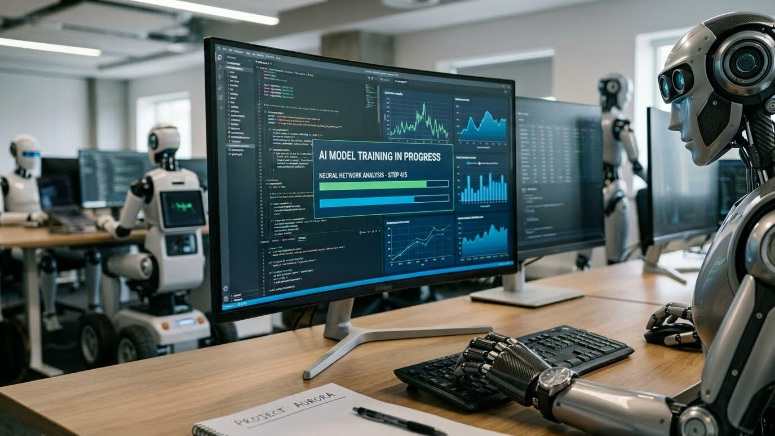
One of the biggest concerns now emerging across the tech industry is that replacing employees with AI is not always cheaper.
Bryan Catanzaro, Vice President of Applied Deep Learning at Nvidia, recently acknowledged that the computing costs required to operate advanced AI models can exceed the salaries of many human workers.
The issue becomes especially clear in industries where human interaction still matters. Customer service, technical support, sales, administrative management, and client relationships continue to rely heavily on real people, even as AI assistants become more sophisticated.
Several companies experimented with workforce reductions supported by AI tools, only to face operational problems, customer complaints, and internal overload.
One of the most discussed examples came from Australia. Commonwealth Bank attempted to replace part of its customer support workforce with AI-powered voicebots. The company expected to reduce thousands of weekly calls, but the opposite happened: complaints increased, resolution times worsened, and managers themselves reportedly had to step in and answer phone lines to handle the overflow.
Eventually, the bank had to bring workers back and admit it had underestimated the importance of human interaction in complex situations.
The episode sent an important message across the market: full automation still faces very real limits when empathy, communication, and problem-solving are involved.
AI Infrastructure Is Extremely Expensive
Another factor beginning to reshape the AI conversation is infrastructure cost.
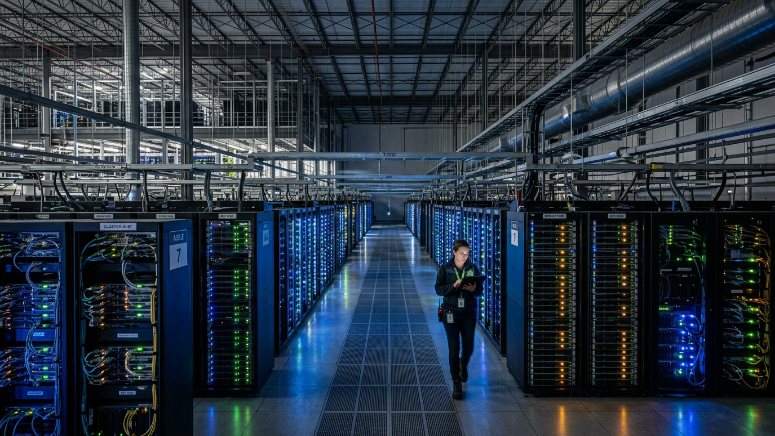
Advanced AI systems require enormous data centers, specialized chips, constant cooling systems, and extremely high energy consumption. Companies like Microsoft, Google, Amazon, and OpenAI are investing billions of dollars just to maintain the operational capacity needed to train and run these models.
Many businesses are now realizing that automating relatively simple tasks with AI can actually cost more than maintaining traditional human teams, especially when systems require constant supervision or generate frequent errors.
There is also another less visible reality behind AI: humans are still deeply involved in the process. Data trainers, moderators, human reviewers, and quality control teams remain essential for correcting outputs, improving responses, and preventing failures.
In many cases, AI is not eliminating jobs entirely — it is simply changing the type of work humans do.
The Labor Market Has Not Collapsed
While some predictions warned that AI would destroy millions of jobs within just a few years, economic data paints a much more moderate picture.
A report from the Yale Budget Lab analyzed the impact of artificial intelligence on the U.S. labor market since 2023 and found that there is still no clear evidence of massive job destruction directly caused by AI.
Even industries considered “highly exposed” to automation have not shown significantly worse deterioration compared to other sectors of the economy.
That does not mean AI is not transforming industries. It clearly is. But the process appears far slower, more expensive, and more complicated than Silicon Valley promised just a couple of years ago.
AI is already changing workflows, accelerating repetitive tasks, and reshaping how companies operate. But the vision of fully automated offices and widespread human replacement still seems far away.
Silicon Valley Is Starting to Adjust Expectations
Sam Altman’s change in tone reflects something many technology companies are quietly beginning to accept: artificial intelligence will likely transform the labor market, but not in the sudden and total way many predicted.
Complete automation still faces economic, technical, and human limitations.
And as the cost of running AI systems continues to rise, more companies are discovering something unexpected: in many cases, human workers are still more efficient, more adaptable — and ultimately, cheaper.