


According to FIFA estimates, independent economic studies, and analyses by international financial institutions, the tournament could generate more than 800,000 direct, indirect, and induced jobs across the United States.
The labor impact will be driven mainly by sectors such as tourism, hospitality, food services, transportation, logistics, temporary infrastructure, security, technology, and event operations.
The scale of the tournament helps explain these numbers. For the first time ever, 48 national teams will participate, and up to 6.5 million fans are expected to travel to the 16 host cities across the United States, Mexico, and Canada. However, a large portion of the economic activity will be concentrated in U.S. cities such as New York, Miami, Los Angeles, Dallas, Houston, Seattle, Atlanta, and Chicago.
According to several economic reports published between 2025 and 2026, the tournament could contribute approximately US$17.2 billion to the United States Gross Domestic Product (GDP) and generate more than US$30.5 billion in total economic activity.
Globally, some studies estimate that the 2026 World Cup could add up to US$40.9 billion to worldwide GDP and generate more than US$80 billion in total economic output.
Which Industries Will Need More Workers?
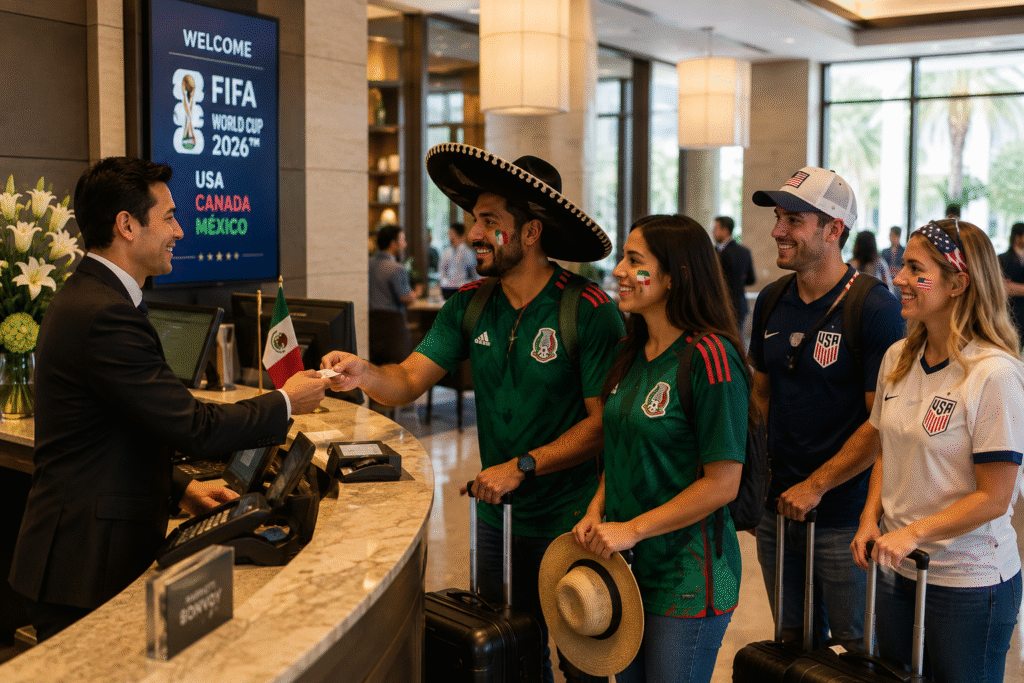
Tourism is expected to be one of the biggest beneficiaries. Hotels, restaurants, bars, and entertainment companies will need to expand their workforce to handle the massive arrival of international visitors.
The most in-demand positions are expected to include:
- Hotel staff.
- Bilingual receptionists.
- Drivers and transportation operators.
- Logistics and warehouse personnel.
- Event workers.
- Security teams.
- Maintenance technicians.
- Customer service representatives.
- Food service employees.
The transportation and logistics sectors will also face significant pressure. The movement of millions of people between airports, stadiums, hotels, and entertainment areas will increase demand for commercial drivers, logistics coordinators, and freight operators.
In addition, many cities will need to expand temporary infrastructure services, urban cleaning operations, and airport support systems.
An Opportunity for Bilingual Employment
The need for bilingual workers could grow significantly during the tournament. Companies connected to tourism and customer services will look for employees capable of communicating in both English and Spanish due to the international profile of the visitors.
For recruiting and staffing companies, the World Cup represents a historic opportunity to fill temporary and permanent positions across multiple industries.
The event could also accelerate hiring in sectors where automation still cannot fully replace human labor, especially in customer service, hospitality, and operational coordination.
The 2026 FIFA World Cup will not only determine the next soccer world champion. It could also become one of the largest generators of jobs and economic activity in the United States during this decade.