

The 2026 FIFA World Cup promises to be one of the most significant sporting events of the decade. With the United States, Mexico, and Canada serving as host countries, millions of people will follow every match with enthusiasm, making the tournament a major topic of conversation both inside and outside the workplace.
However, the impact of the World Cup extends far beyond fans and stadiums. Within companies, matches, results, and soccer discussions also become part of everyday routines. In this context, workplace culture experts agree that the tournament presents a unique opportunity to strengthen team engagement and improve the employee experience.
Great Place To Work, the global authority on workplace culture and employee experience, analyzed how employees experience major sporting events and identified the initiatives they value most when organizations choose to embrace the excitement surrounding the World Cup.
The conclusion is clear: when companies recognize the importance of the World Cup to their employees, they can transform that shared passion into a powerful tool for fostering belonging, inclusion, and motivation.
The World Cup as a Tool for Human Connection
In increasingly diverse organizations, where different generations, cultures, and working styles coexist, creating genuine connections can be challenging.
Soccer offers a unique advantage: it is one of the few topics capable of bringing together people with very different backgrounds around a common conversation.
During a World Cup, employees who might not normally interact begin exchanging opinions, sharing predictions, discussing plays, and following results together. These small moments help build relationships that often carry over into daily work activities.
For many organizations, the challenge is not preventing the World Cup from entering the workplace, but rather finding ways to leverage it positively.
The Eight Initiatives Employees Value Most
Based on surveys of employees and human resources leaders, Great Place To Work identified eight actions that generate high levels of participation and enthusiasm within organizations.
1. Organize a Prediction Contest with Prizes
The most frequently mentioned initiative was creating a World Cup prediction pool with prizes.
Beyond the fun factor, these competitions encourage interaction between employees from different departments and help maintain engagement throughout the tournament.
Participants emphasized that the activity should be open to everyone and include meaningful recognition for winners.
2. Create Spaces to Watch Matches
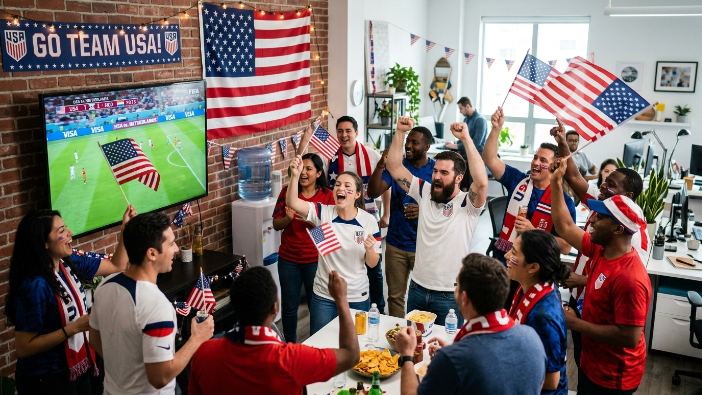
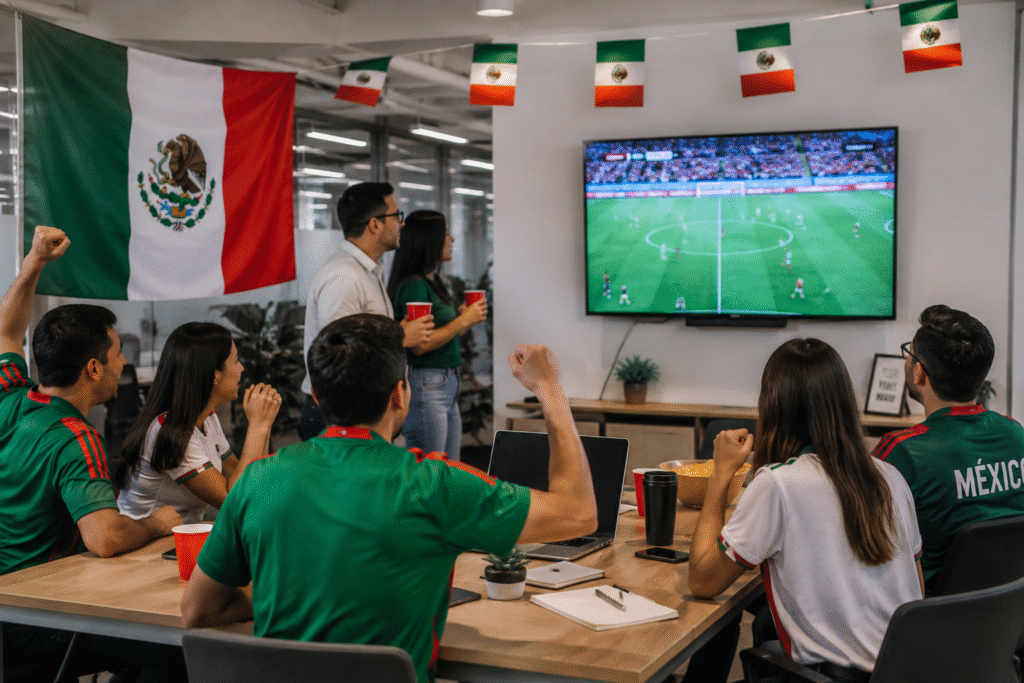
Setting up a conference room, break area, or common space where employees can watch games together ranked among the most appreciated initiatives.
Sharing breakfast, coffee, or lunch while watching a match creates moments of connection that are difficult to replicate through traditional corporate activities.
It also allows employees to enjoy the experience without feeling they must choose between work and the tournament.
3. Incorporate World Cup-Themed Items
Jerseys, scarves, mugs, tumblers, and other World Cup-related items help reinforce the festive atmosphere.
These gestures do not require significant investments but demonstrate that the organization supports what excites its people.
4. Decorate the Workplace
Themed decorations also rank high among employee preferences.
Flags, national colors, and World Cup-inspired decorations can temporarily transform the workplace environment and create a more engaging atmosphere.
Many organizations use this opportunity to celebrate cultural diversity by representing all participating nations.
5. Avoid Scheduling Meetings During Key Matches
One of the simplest initiatives is also one of the most effective.
Adjusting schedules and avoiding meetings during major matches is often interpreted by employees as a sign of empathy and understanding.
When people feel their interests are recognized, their perception of leadership and company culture tends to improve.
6. Offer Workplace Flexibility
The option to work remotely during important matches or adjust schedules on key tournament days is among the most requested benefits.
These decisions communicate trust and demonstrate a culture focused on outcomes rather than physical presence.
For organizations with hybrid or remote work models, implementing this measure can be relatively simple.
7. Create Internal World Cup Activities
Creative initiatives often generate strong participation.
Popular ideas include soccer trivia contests, sticker album challenges, raffles, fan zones, interdepartmental competitions, and charitable activities linked to tournament outcomes.
These activities add a fun dimension that helps strengthen community and engagement.
8. Listen to Employees
More important than any specific initiative is asking employees what they actually want.
Not every organization has the same culture, and not every employee experiences the World Cup with the same level of enthusiasm.
Adapting activities to each company’s reality increases participation and helps ensure that initiatives feel authentic rather than forced.
A Small Investment with Long-Term Benefits
One of the most interesting findings from the report is that none of these initiatives require significant budgets.
In most cases, the value lies not in financial investment but in a company’s willingness to recognize what matters to its employees.
Active listening, flexibility, and opportunities for connection often have a far greater impact than expensive or complex programs.
For companies operating across Mexico and the United States, where the 2026 FIFA World Cup will have an unprecedented presence, these opportunities become even more relevant.
Beyond the results on the field, the tournament can become a valuable tool for strengthening relationships, improving internal communication, and creating shared experiences that remain in employees’ memories long after the final whistle.
After all, matches last ninety minutes. The human connections built around them can strengthen organizational culture for much longer.