

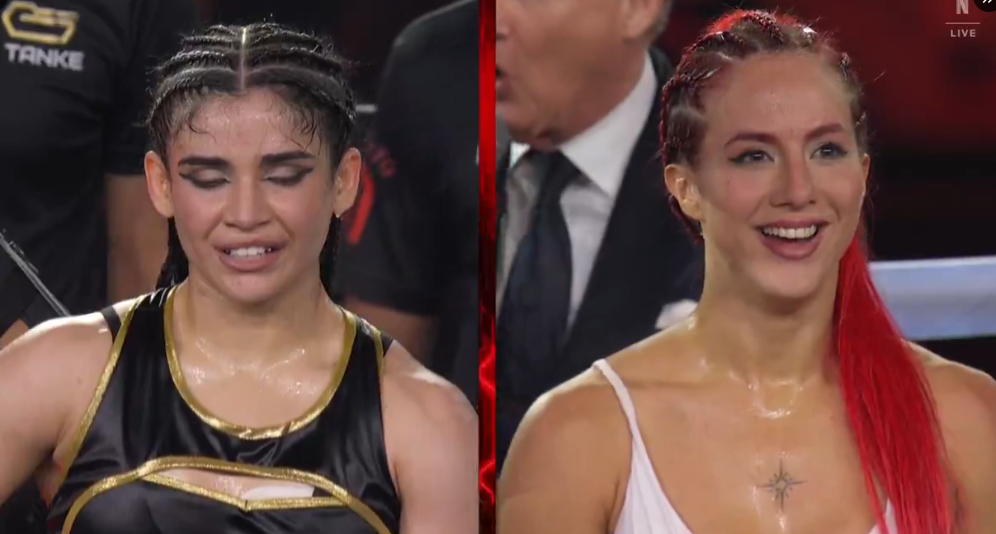
Their clash at Supernova Génesis 2026 left more than a result in the ring. Vigna’s victory and Flores’ subsequent retirement opened a broader conversation: what does this story tell us about how we work, grow, and make decisions in our professional lives?
In a world where careers are no longer linear or permanent, this episode becomes a near-perfect case study from a Human Resources and psychology perspective.
When work arrives at the right moment (but not forever)
https://x.com/alanafloresf/status/2048648209933754505?ref_src=twsrc%5Etfw%7Ctwcamp%5Etweetembed%7Ctwterm%5E2048648209933754505%7Ctwgr%5E32b921e90b340ba14c48fe91a8214839e8a37f43%7Ctwcon%5Es1_&ref_url=https%3A%2F%2Fwww.bajastartalent.com%2Fflor-vigna-y-alana-flores-lo-que-su-pelea-y-retiro-ensenan-sobre-rrhh-psicologia-y-el-futuro-del-trabajo%2FOne of the most powerful elements of Alana Flores’ story is her statement that boxing “saved her life.” Far from being purely emotional, this reflects a common phenomenon in today’s labor market.
Many people enter certain jobs or activities during critical moments—not necessarily out of vocation, but in search of structure, discipline, or emotional stability. In psychology, this aligns with the idea that work can serve a regulatory function: it creates order, provides meaning, and fosters belonging.
However, this case also shows that such a role is not always permanent. What once served as a lifeline may eventually stop fulfilling that purpose. From an HR perspective, this challenges a traditional assumption: not all talent is looking to build a long-term career in the same role or industry.
The value of knowing when to walk away
In more traditional work cultures, leaving or changing direction is often seen as failure. But Alana Flores’ retirement suggests a different interpretation: stepping away can be a mature, conscious, and healthy decision.
Recognizing that “this is not a lifestyle I can sustain” demonstrates emotional intelligence. It reflects self-awareness, evaluation skills, and, above all, the ability to set boundaries—qualities that are increasingly valued in high-demand work environments.
For organizations, the lesson is clear: professional development should not be measured only by tenure or promotions, but also by the ability to make decisions aligned with personal well-being.
High performance and burnout: the hidden cost
"Flor Vigna"
— Tendencias Stream (@TndenciaStream) April 27, 2026
Porque ganó su pelea contra Alana Flores y rompió su racha de invicta en Supernova: Génesis. pic.twitter.com/uy1ea3XoI7
Boxing, like many high-performance professions, combines discipline, pressure, and exposure. The same is true across industries today—from tech to logistics to corporate leadership.
This case highlights a central tension in the modern workplace: high performance comes at a cost—and that cost is not always visible. Mental fatigue, emotional exhaustion, and loss of motivation are common when demands are not properly managed.
This places HR in a more strategic role than ever: moving away from glorifying extreme effort and toward designing sustainable work models. That includes well-being policies, recovery spaces, and a culture that does not reward endurance alone.
Professional identity in transformation
Another key takeaway is the flexibility of professional identity. Alana Flores is not just a boxer—she is also a streamer, content creator, and now a professional in transition. Flor Vigna, meanwhile, blends her artistic career with sports.
These hybrid career paths are becoming increasingly common. The idea of a single lifelong profession is being replaced by dynamic trajectories where individuals explore multiple dimensions of their talent.
For HR, this represents a paradigm shift: instead of seeking rigid profiles, organizations must value adaptability, learning ability, and diverse experience.
Meaning at work: beyond salary
Both Vigna and Flores agree on one thing: boxing had a profound impact on their lives. This connects with a core concept in organizational psychology—meaningful work.
Today, people are not just looking for income. They seek experiences that allow them to grow, overcome challenges, and build a meaningful personal narrative. When work fulfills that role, engagement and motivation increase.
However, this story also shows that meaning evolves. What was once transformative may eventually lose its significance. That’s why organizations must create environments where purpose is not static, but adaptable.
Competing without losing humanity
Finally, there is a subtle but powerful element: mutual respect. Despite the intensity of the fight, the aftermath was marked by recognition between both athletes.
In a competitive work environment, this offers an important lesson. It is possible to compete without becoming toxic. It is possible to pursue results without dehumanizing others.
A story that reflects the future of work
The case of Flor Vigna and Alana Flores is not an isolated one. In many ways, it reflects how the rules of the professional world are changing.
Non-linear careers, decisions driven by well-being, the search for meaning, and the constant redefinition of success are trends shaping every industry.
For HR, the challenge is clear: move from rigid models to more flexible, human, and adaptive structures. Because in the new world of work, true talent is not the one that endures everything—but the one that knows how to evolve.