


The image of the brilliant, self-assured boss with a remarkable ability to win others over is often linked to successful leadership. Yet science increasingly shows that some of these same qualities can also be tied to less desirable personality traits.
Several studies conducted in recent years have found that people with higher levels of narcissism, Machiavellianism, and psychopathy — known in psychology as the Dark Triad — are more likely to reach leadership positions. But they also reveal a paradox: although these individuals tend to rise faster, they aren’t necessarily the ones who perform best once they reach the top.
For organizations and HR teams, the challenge lies in telling true leadership potential apart from mere charisma or excessive self-confidence.
What Is the Dark Triad
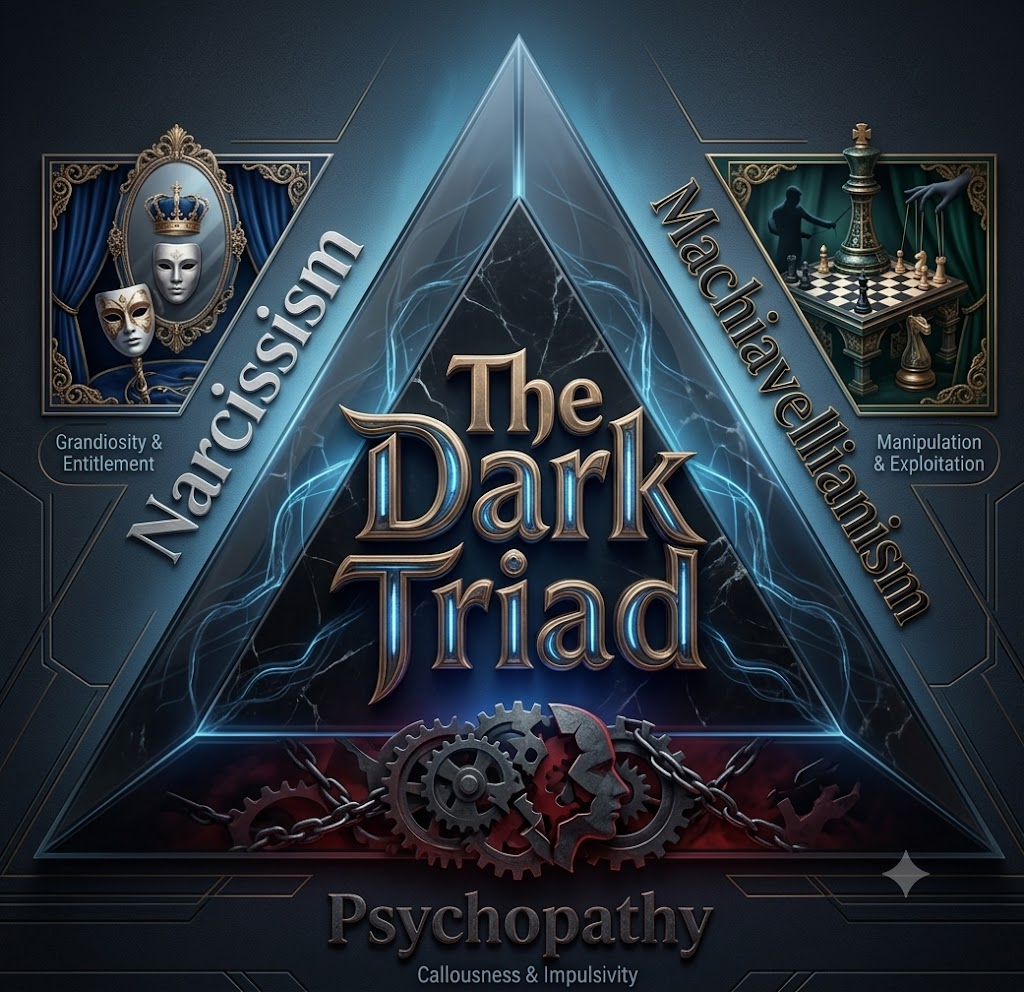
The Dark Triad is a concept developed in psychology to describe three personality traits that, at high levels, can create problems in workplace relationships.
- Narcissism: a constant need for recognition, inflated self-esteem, and a sense of superiority.
- Machiavellianism: a tendency to manipulate situations and people for personal gain.
- Psychopathy: low empathy, impulsivity, emotional coldness, and a greater willingness to take risks.
Having any of these traits doesn’t automatically make someone a bad leader. All three can appear to varying degrees across the general population. What matters is understanding how they influence access to positions of power — and performance once someone gets there.
A Study Linking Hierarchy and Dark Traits
Research involving 355 people from Germany and Hungary looked at employees across different hierarchical levels, from individual contributors with no direct reports to founders and CEOs.
The results showed a clear trend: the higher the leadership level, the higher the scores on Dark Triad traits.
What’s most interesting is that this relationship showed up in two different ways. On one hand, the leaders themselves rated themselves higher on these traits. On the other, their own subordinates described them with similar characteristics.
In other words, the perception was consistent both from the leaders’ own point of view and from the people who worked under them.
The researchers concluded that people with higher levels of these traits have a stronger presence in leadership roles, especially in senior executive positions.
Why Do They Manage to Rise?
The answer doesn’t seem to lie in personality alone, but also in how organizations interpret certain behaviors.
Research published by Zhou and colleagues (2020) found that people with higher levels of narcissism tend to display very high work energy, a strong drive to lead, and a strong willingness to take center stage.
That drive also tends to grow as they move up within the organizational structure.
In practice, this means they’re more likely to volunteer for high-visibility projects, actively participate in decision-making, and project an image of confidence that often proves appealing to those evaluating candidates for promotion.
Excessive confidence can be mistaken for competence.
Ease of public speaking can be interpreted as leadership.
And an apparent absence of doubt in complex situations can be perceived as a strength — even when the decisions made aren’t always the best ones.
Charisma Can Open Doors
This research also helps explain why some people leave such a positive impression during hiring or promotion processes.
Human beings tend to associate confidence with competence.
Someone who speaks with conviction, projects certainty, and seems to have all the answers is often perceived as a natural leader.
That first impression, however, doesn’t always match actual performance once that person takes on a position of responsibility.
For this reason, more and more organizations are adopting leadership assessments that go beyond the traditional interview, evaluating competencies such as empathy, the ability to develop teams, emotional intelligence, and ethical decision-making.
It’s Not All Bad News
The scientific evidence also cautions against oversimplified conclusions.
A systematic review of 15 academic studies published since 2014 found that moderate levels of narcissism can bring certain benefits in specific contexts.
These include:
- Greater self-confidence
- Persuasive ability
- Ease in making difficult decisions
- Better performance in highly competitive environments
In other words, some traits that make up the Dark Triad can actually be useful when present in moderate degrees and paired with other leadership skills.
The problem arises when these traits become dominant.
They Rise Faster, But Don’t Necessarily Lead Better
This same body of research uncovered the most revealing finding of all.
Leaders with high levels of Dark Triad traits tend to show weaker organizational performance, especially when results are measured over the long term.
In other words, they may rise quickly thanks to their confidence, ambition, and ability to influence others — but once in positions of power, they tend to struggle more with building teams, earning trust, and maintaining a healthy work environment.
This phenomenon helps explain why some people reach executive positions in a short amount of time, only to end up driving high turnover, internal conflict, or declining engagement among their teams.
A Challenge for HR
For those working in talent acquisition and development, this research offers an important lesson.
Effective leadership doesn’t depend solely on charisma or the ability to project confidence.
It also requires listening, empathy, integrity, collaboration, and the ability to help others grow.
Evaluating candidates based only on executive presence or persuasive ability can lead organizations to promote people who impress early on but later struggle to sustain results.
The scientific evidence doesn’t claim that every CEO or executive is a narcissist. What it shows is something far more interesting: certain personality traits can accelerate career advancement, but they don’t guarantee successful leadership.
And that distinction may be one of the keys to building healthier organizations and higher-performing teams.