


For more than two decades, the internet worked in essentially the same way. Whenever people needed information, they typed a few keywords into a search engine, reviewed a list of links, and selected the one they wanted to open. That process shaped how entire generations studied, worked, and learned.
Today, artificial intelligence is changing that habit at a pace rarely seen in the history of technology.
Google has released a new report on user behavior in AI Mode, its AI-powered search experience, and the findings suggest this is far more than an improvement to traditional search. What is happening is a fundamental shift in the way people interact with information—and one that will have direct consequences for the labor market.
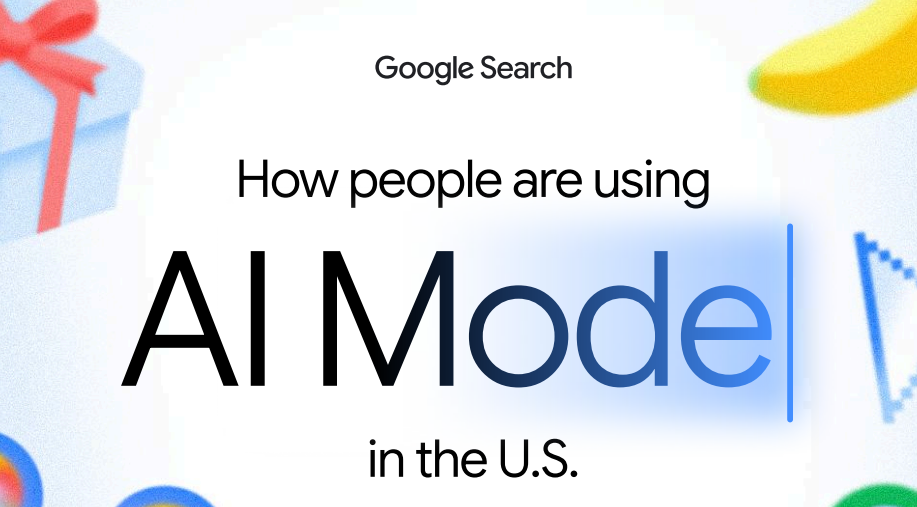
According to the company, AI Mode now serves more than one billion monthly active users, while the number of queries continues to grow quarter after quarter. More important than the scale of adoption, however, is the behavioral change identified in the report.
People are no longer using artificial intelligence simply to find quick answers. Increasingly, they rely on it to analyze complex situations, organize projects, learn new skills, and make better-informed decisions.
From Keywords to Conversations
One of the report’s most significant findings is that traditional keyword searches are giving way to full conversations.
Only a few years ago, users might have searched for terms such as “job interview,” “resume,” or “digital marketing.” Today, their questions are far more natural and specific. People ask how to prepare for an interview after spending several years in the same job, which skills they should develop to work remotely, or the best strategy for negotiating a salary increase.
Google explains that AI Mode queries are, on average, three times longer than traditional searches. That reflects a profound change: simply finding information is no longer enough. Users expect artificial intelligence to understand context, analyze multiple variables, and provide practical solutions to real-world problems.
This evolution is also changing how people develop new skills. Knowing how to ask clear questions, provide relevant context, and interact effectively with AI systems is becoming just as valuable as using spreadsheets or speaking a second language.
Artificial Intelligence Becomes a Workplace Assistant
The report also reveals that planning is one of AI Mode’s fastest-growing use cases.
Queries related to organizing tasks, structuring projects, and planning activities have grown 80% faster than the average AI Mode search over the past six months.
This demonstrates that artificial intelligence is evolving into a much more active partner in professional life. Increasingly, users rely on AI to build work schedules, design training programs, prepare meetings, organize business travel, and establish long-term goals.
Rather than simply answering questions, AI is beginning to function as a workplace assistant capable of helping organize day-to-day work. This allows professionals to spend less time on repetitive tasks and more time on activities that require analysis, creativity, and decision-making.
Creativity Is Changing Too
Another trend highlighted by Google is the steady growth in idea-generation queries.
Brainstorming-related searches have increased 30% faster than the overall average within AI Mode. This suggests that thousands of professionals are already integrating artificial intelligence into their creative processes.
Designing marketing campaigns, preparing presentations, creating content, discovering innovative approaches to projects, or simply overcoming writer’s block are just some of the areas where AI is becoming an increasingly valuable tool.
Rather than replacing human creativity, these technologies provide a starting point for exploring new ideas and accelerating innovation.
New Skills for a New Labor Market
For professionals working in human resources, learning and development, and talent management, the report delivers a clear message: the skills employers value are changing.
For years, digital literacy meant learning how to use computers, browse the internet, and operate office software. Today, a new stage is emerging—one in which professionals must understand how to work effectively alongside artificial intelligence.
This includes writing clear prompts, evaluating the quality of AI-generated responses, identifying possible errors, verifying information, and using AI as a problem-solving tool without becoming completely dependent on it.
Companies will also need to rethink their training programs. Simply adopting AI technologies will not be enough. Organizations must teach employees how to use these tools strategically and responsibly to improve productivity while preserving critical thinking and human judgment.
The Future of Search Has Already Begun
The report also shows that interacting with technology will become increasingly natural. A growing share of searches in the United States is already performed using voice and images, a trend expected to accelerate as AI models become better at understanding spoken language, photographs, and videos.
Everything points to the beginning of a new era for the internet, where searching for information will no longer be an isolated activity but an ongoing conversation between people and artificial intelligence.
For millions of workers, students, and organizations, this transformation represents far more than technological innovation. It signals a fundamental shift in how people learn, plan, create, and solve problems.
Those who develop the ability to collaborate with artificial intelligence, leverage its capabilities, and combine its insights with sound human judgment will be better prepared for a labor market in which uniquely human skills—critical thinking, creativity, communication, and adaptability—remain the greatest competitive advantage.
Google’s report makes one thing clear: this future no longer belongs to the years ahead. It is already being built today.