


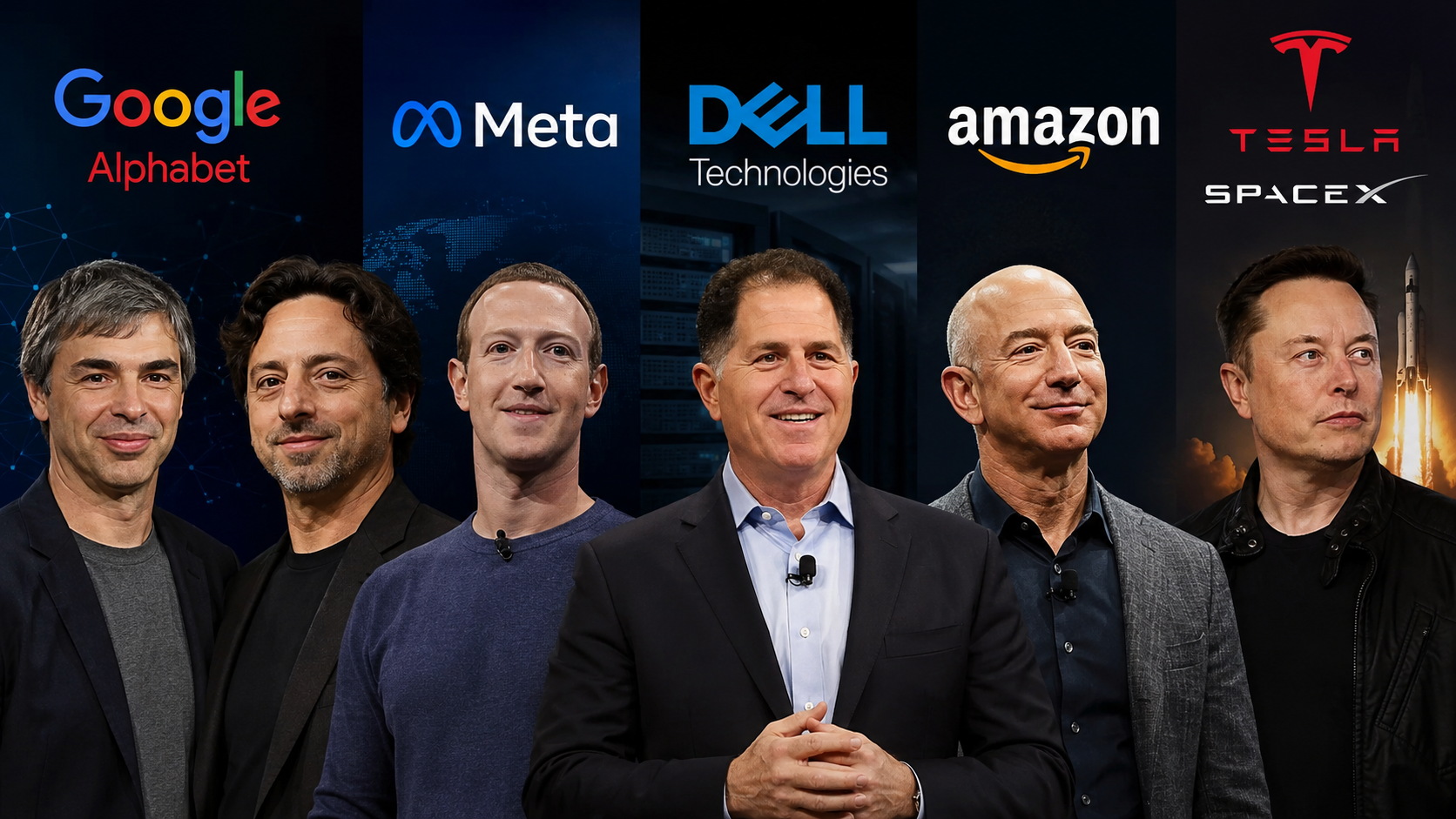
Forbes released its June 2026 update of the world’s richest people, and the results reveal much more than a list of billionaires. Behind every name is a clear indication of where the global economy is heading, which industries are growing the fastest, and what skills employers are increasingly seeking in today’s workforce.
The ten richest individuals on the planet now hold a combined net worth of nearly $2.9 trillion, a figure larger than the annual GDP of many developed nations. Yet the most important takeaway is not how much wealth they possess, but how they built it.
Technology dominates virtually the entire ranking.
Nine of the ten richest people in the world built their fortunes through companies connected to software, artificial intelligence, the internet, digital infrastructure, semiconductors, cloud computing, or e-commerce. The only exception is Bernard Arnault, chairman and CEO of luxury giant LVMH.
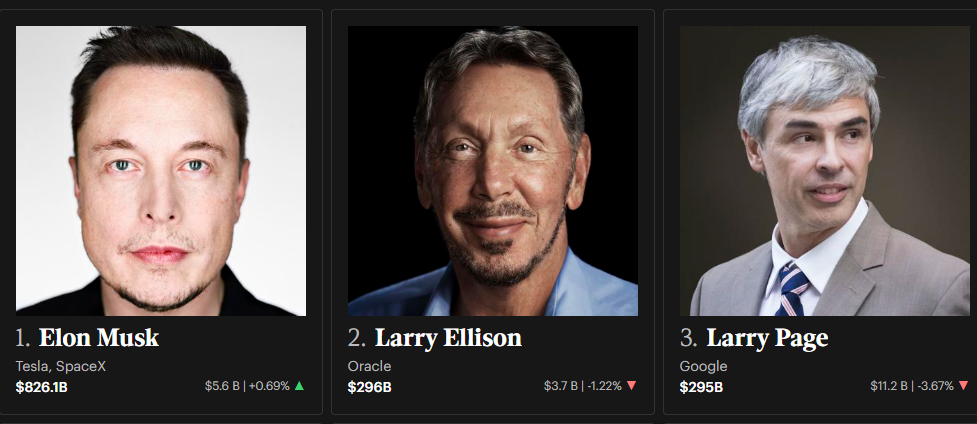
Forbes Top 10 Richest People in the World – June 2026
| Rank | Person | Net Worth | Primary Industry |
|---|---|---|---|
| 1 | Elon Musk | $835 billion | Technology, aerospace, and automotive |
| 2 | Larry Page | $309 billion | Internet and technology |
| 3 | Larry Ellison | $296 billion | Software and cloud infrastructure |
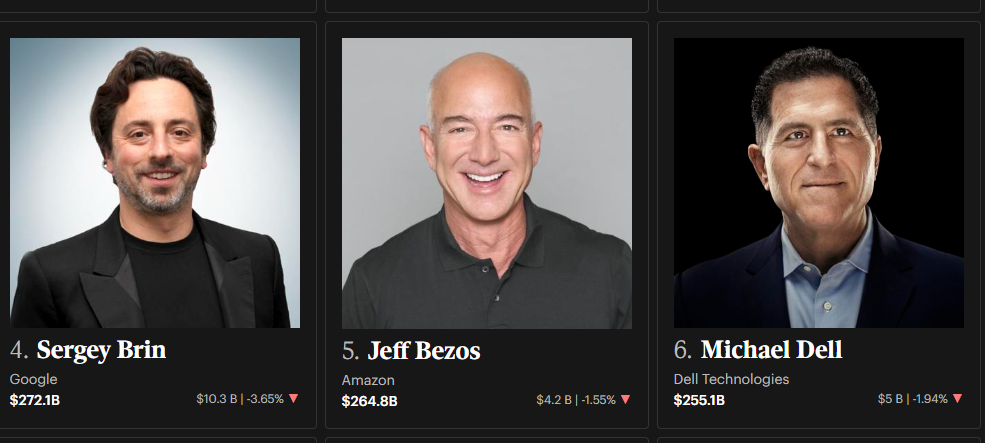
| 4 | Sergey Brin | $285 billion | Internet and technology |
| 5 | Jeff Bezos | $277 billion | E-commerce and cloud services |
| 6 | Michael Dell | $244 billion | Hardware and IT infrastructure |
| 7 | Mark Zuckerberg | $217 billion | Social media and technology |
| 8 | Jensen Huang | $182 billion | Semiconductors and artificial intelligence |
| 9 | Bernard Arnault | $148 billion | Luxury goods and consumer products |
| 10 | Steve Ballmer | $141 billion | Software and professional sports |
Artificial Intelligence Is No Longer a Trend—It Is the Economic Engine of the Moment
One of the most notable figures in the ranking is Jensen Huang, founder and CEO of Nvidia. His rapidly growing fortune reflects the massive global demand for the chips used to train and operate artificial intelligence systems.
The expansion of generative AI tools, business automation, data analytics, and predictive technologies is driving billions of dollars in investments in digital infrastructure. As a result, companies operating within this ecosystem have reached record valuations.
A similar story can be seen with Larry Ellison, founder of Oracle, whose wealth has surged alongside growing demand for data centers, cloud services, and platforms capable of supporting AI workloads.
The message is clear: organizations increasingly need professionals who can work alongside advanced technologies, interpret data, automate processes, and adapt to constantly evolving digital environments.
Founders Continue to Lead
Another interesting aspect of the ranking is that many of the world’s largest fortunes belong to founders who continue to influence the companies they created decades ago.
Larry Page and Sergey Brin remain closely connected to Google and Alphabet. Mark Zuckerberg continues to lead Meta. Michael Dell still plays a central role at Dell Technologies. Jeff Bezos maintains significant influence over Amazon, while Elon Musk continues to oversee multiple technology companies simultaneously.
This reflects a common characteristic among the world’s most successful business leaders: the ability to build long-term ventures, adapt to changing markets, and continuously reinvent themselves.
For professionals looking to advance their careers, the lesson is significant. Technical expertise remains important, but strategic thinking, lifelong learning, and the ability to lead transformation are becoming equally valuable.
Skills That Continue to Gain Value
Looking at the ranking as a whole, several competencies stand out as increasingly important in today’s labor market:
- Adaptability to technological change
- Artificial intelligence literacy
- Data analysis
- Distributed team leadership
- Innovation and problem-solving
- Strategic thinking
- Effective communication
- Digital project management
More companies are seeking candidates who combine technical expertise with uniquely human capabilities that are difficult to automate.
As intelligent systems take over repetitive tasks, demand is rising for professionals who can make decisions, lead teams, interpret complex information, and create new business opportunities.
What Does This Mean for Job Seekers?
The Forbes ranking also offers an important lesson for people building their careers.
The fastest-growing industries are closely tied to digital transformation. This does not mean everyone needs to become a software engineer or programmer, but technological literacy is increasingly becoming a core skill across nearly every profession.
Human resources, marketing, sales, logistics, finance, customer service, and operations management already rely on artificial intelligence tools in their daily activities.
Professionals who understand these technologies and know how to use them effectively will have stronger opportunities for career growth in the years ahead.
The Future Belongs to Those Who Keep Learning
The 2026 billionaire ranking demonstrates that global wealth is increasingly concentrated in industries capable of driving innovation, scaling technology, and solving complex problems.
Beyond the record-breaking fortunes, the real lesson is clear: the most valuable skills of the future will be linked to continuous learning, adaptability, and the ability to work alongside increasingly sophisticated technologies.
In a labor market evolving at unprecedented speed, knowledge remains the most profitable investment anyone can make.