


Trump’s Vision for “New American Industrialism” raises questions. He proposed a 100% tariff on cars imported from Mexico, pushing automakers to shift production to the U.S
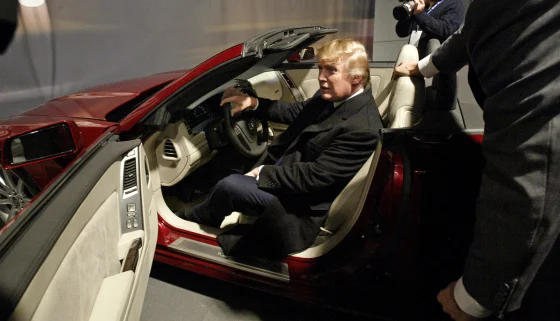
Donald Trump has vowed to halt U.S. companies from sending jobs overseas and to bring foreign factories and jobs to America through steep tariffs. In a speech delivered in Savannah, Georgia, on Tuesday, Trump proposed a 100% tariff on cars imported from Mexico, pushing automakers to shift production to the U.S. He specifically targeted German car manufacturers, stating, “I want German car companies to become American car companies. I want them to build their plants here.”
This approach, however, could disrupt the American auto industry. Many automakers, including German companies, already have manufacturing plants in the U.S. For example, BMW operates a massive plant in South Carolina, employing 11,000 people. Experts like Sam Abuelsamid, an analyst for Guidehouse Insights, argue that Trump’s plan would force these companies to move production from their German plants, potentially leading to inefficiencies and underutilized facilities. “It makes no sense,” said Abuelsamid.
Proposing a “New American Industrialism” without no details
During his speech, Trump unveiled a broader economic agenda, positioning it as a “new American industrialism” that would generate millions of jobs. He proposed cutting corporate taxes from 21% to 15% for companies that manufacture within the U.S., while Democratic Vice President Kamala Harris aims to raise the corporate tax rate to 28%.
Trump also proposed appointing an ambassador to attract foreign manufacturers to U.S. soil, offering them access to federal land. However, many details of these plans remain unclear, including whether tax cuts would apply to companies using imported parts or how offering federal land would align with existing restrictions on foreign entities.
Trump’s record on attracting foreign investments has faced scrutiny. One notable case involved Foxconn, a Taiwanese electronics giant, which pledged a $10 billion investment and 13,000 jobs in Wisconsin—a promise that remains largely unfulfilled.
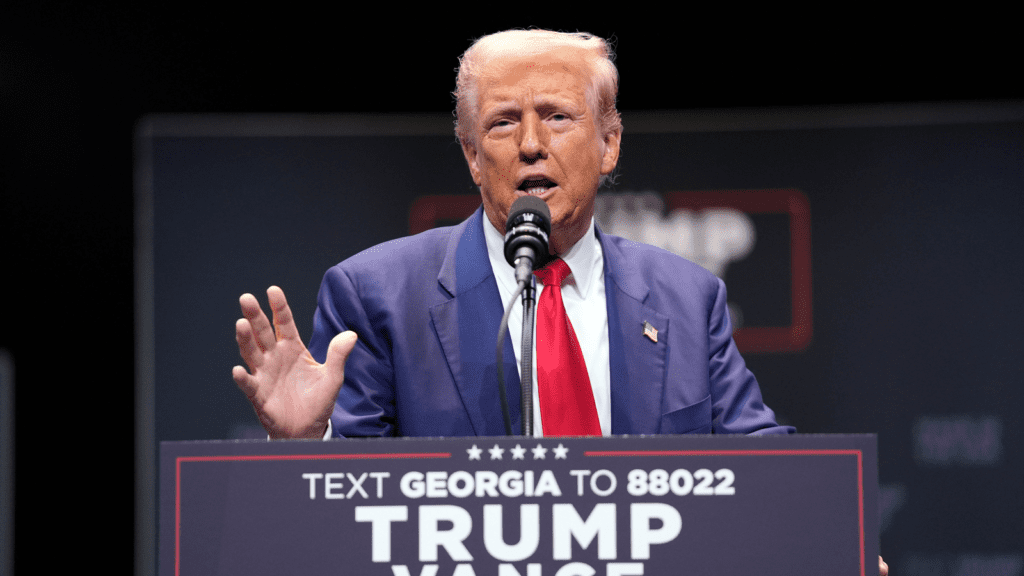
As part of his strategy to bolster American industry, Trump advocated for fewer environmental regulations, promising to boost domestic energy production. He stated, “America’s got the oil, it’s got the gas. The only thing we don’t have is smart people leading our country.”
The Political Landscape in Georgia
Trump’s speech in Savannah came as political tensions continue to rise in Georgia. After a prolonged feud, Republican Governor Brian Kemp recently endorsed Trump, though Kemp skipped the event to campaign in Pennsylvania. Trump’s popularity in Georgia, a key swing state, remains under scrutiny as the race tightens, with some Republicans concerned about the state’s shifting political climate.
Despite the political drama, Trump supporters, like Heather Mathis, believe the former president’s chances in Georgia remain strong. “Many people have personality differences. It doesn’t make any of them bad,” Mathis said, downplaying tensions between Trump and Kemp.