

Often associated with tradition rather than management theory, Three Kings Day offers a surprisingly modern lens on diversity, shared leadership, and purpose-driven teamwork—core challenges for today’s HR leaders.
In the United States, Three Kings Day is typically viewed as a cultural or seasonal tradition, not a framework for organizational thinking. Yet when stripped of its religious framing and read as a symbolic narrative, it offers a useful metaphor for how high-performing teams operate in complex, uncertain environments.
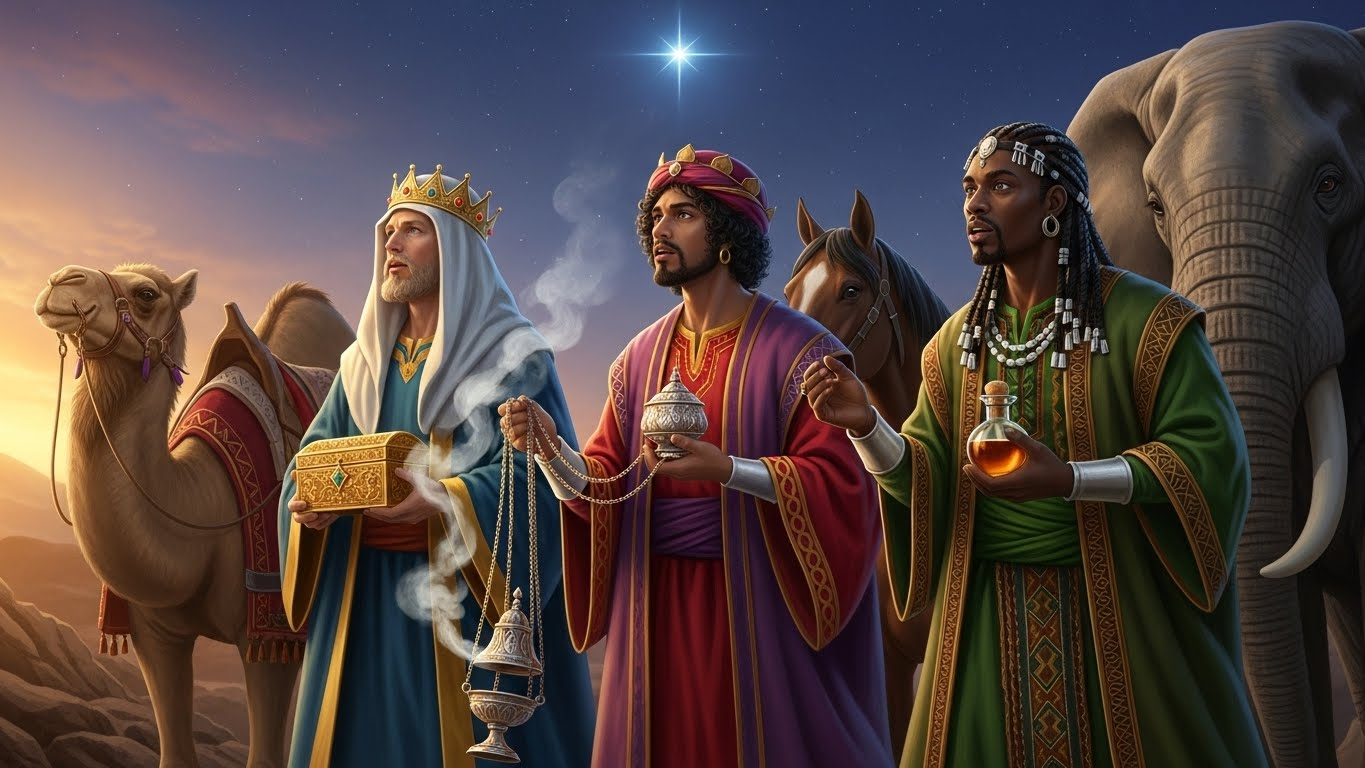
At its core, the story centers on three individuals from different regions and backgrounds who align around a single objective and choose to move forward together. There is no formal hierarchy, no rigid chain of command, and no guarantee of success. What holds the group together is a shared sense of purpose—something Human Resources professionals increasingly recognize as a key driver of engagement, retention, and performance.
Diversity that goes beyond representation
One of the most striking aspects of the Three Kings narrative is that difference is not treated as an obstacle to overcome, but as a starting point. Each figure brings a distinct background, perspective, and way of interpreting the world. None is asked to conform or minimize those differences in order to belong.
For modern organizations, this distinction matters. Diversity initiatives often focus on representation, but performance depends on whether diverse perspectives are genuinely integrated into decision-making. High-performing teams are not homogeneous; they are intentionally built around different strengths, experiences, and problem-solving styles. The Three Kings story illustrates this dynamic in its simplest form: progress is possible because differences coexist, not despite them.

Complementary contributions, not interchangeable roles
The offerings traditionally associated with the Three Kings—different in nature and meaning—can be read as a metaphor for non-overlapping contributions. Each one brings something distinct to the table, and no single contribution replaces another.
In organizational terms, this highlights the importance of role clarity and complementarity. Strong teams are rarely made up of people doing the same thing equally well. They succeed because individuals contribute in different ways, at different moments, toward a common goal. For HR leaders, this reinforces the importance of team design, not just individual talent acquisition.
Leadership without a single authority
Another relevant aspect of this narrative is the absence of a dominant leader. Decision-making appears shared, adaptive, and context-driven rather than centralized. Leadership emerges through expertise and timing, not title.
This model closely aligns with how many modern organizations operate, particularly in knowledge-based, project-driven, or remote environments. As work becomes more complex, leadership increasingly shifts from control to coordination. The ability to influence, align, and enable others often matters more than formal authority.
Navigating uncertainty as a team capability
The journey associated with the Three Kings is defined by uncertainty. There is no detailed plan, no clear timeline, and no guarantee of outcomes. The group adjusts as it moves forward, responding to signals rather than fixed instructions.
Today’s business environment mirrors this reality. Market volatility, technological disruption, and geopolitical shifts have made uncertainty the norm rather than the exception. Teams that perform well under these conditions are not those with perfect foresight, but those capable of adapting quickly while staying aligned around a shared objective.
Trust as the invisible infrastructure
None of this works without trust. Moving forward in uncertain conditions requires confidence in others’ judgment, intentions, and commitment. There is little room for constant oversight or micromanagement.
In distributed and hybrid workplaces, trust has become a foundational element of organizational effectiveness. HR plays a critical role in shaping cultures where autonomy is supported, accountability is clear, and collaboration is built on mutual respect rather than control.
Why this matters for HR today
Viewed through a contemporary HR lens, Three Kings Day becomes more than a cultural tradition. It becomes a reminder that effective teams are built around purpose, diversity, trust, and shared responsibility—not rigid structures.
For Human Resources professionals navigating increasingly complex workforce dynamics, this metaphor offers a simple but powerful insight: performance is less about hierarchy and more about alignment. When individuals with different strengths move together toward a common goal, uncertainty becomes manageable—and progress becomes possible.