


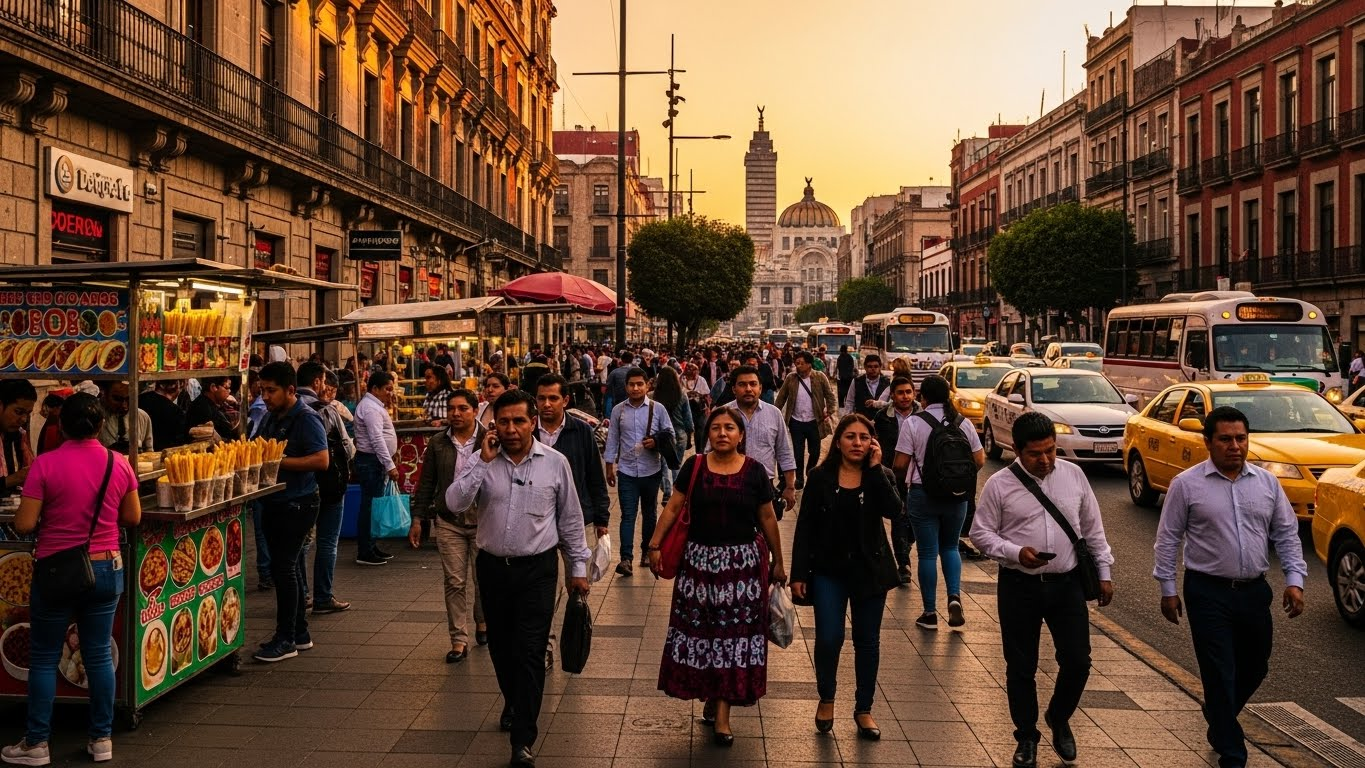
This ranking of the countries where people work the most hours reveals deep differences in labor models around the world. Mexico ranks among the top, while the United States works more hours than most developed economies. Why longer hours don’t always mean higher productivity.
In a global economy shaped by automation, remote work, and the promise of greater efficiency, one reality remains stubbornly persistent: millions of people still work long hours, with little rest and an increasingly fragile balance between personal life and employment. International rankings that compare how many hours workers put in each year across countries highlight these contrasts clearly—and also reveal how different economies structure their productive time.
These rankings, built on official statistics and data from international organizations, don’t just show how much people work. They also offer a window into the social and economic models that dominate each region.
What This Ranking Measures and Why It Matters
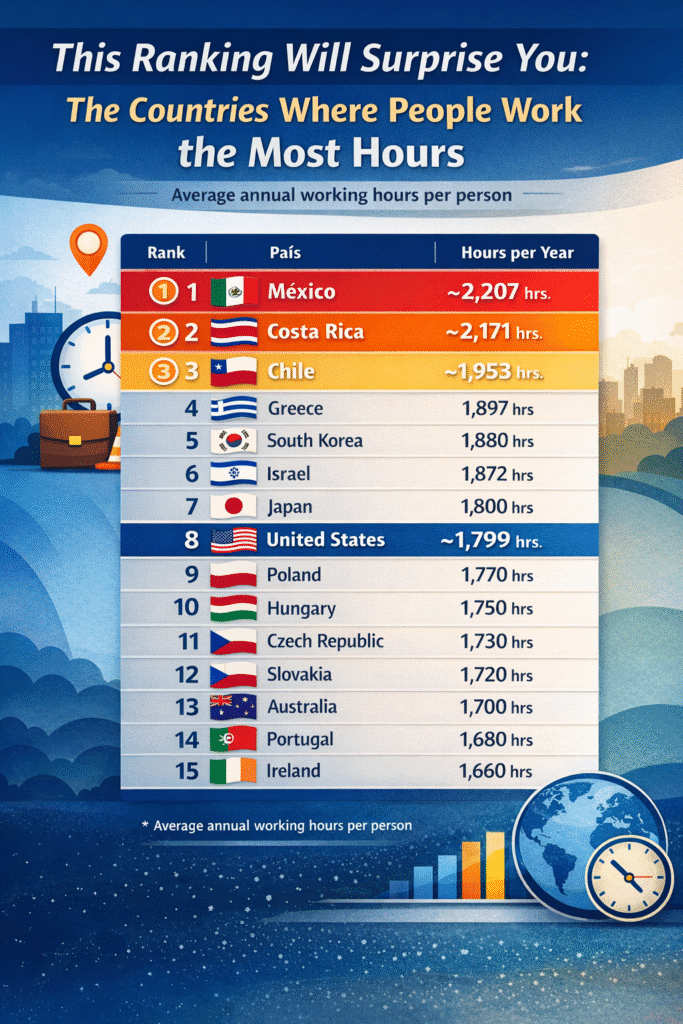
The ranking of countries where people work the most hours is based on the average number of hours actually worked per employed person each year. This includes not only regular work schedules, but also overtime, second jobs, and, in many cases, informal labor.
This metric matters because it helps explain more than just effort. Longer hours are often associated with higher stress levels, less personal time, greater health risks, and fewer opportunities for education, leisure, and family life.
More importantly, working longer does not necessarily mean being more productive. In fact, many countries with shorter workweeks achieve higher productivity per hour, challenging the long-held assumption that “more hours” automatically equals “better results.”
Mexico: Among the Hardest-Working Countries in the World
In this ranking, Mexico consistently appears near the top. On average, Mexican workers log more hours per year than those in most developed economies, surpassing nearly all European countries—and even the United States.
This position reflects a combination of structural and cultural factors. On one hand, long workdays have historically been normalized in Mexican labor culture. On the other, economic pressure pushes many workers to accept overtime, second jobs, or extended schedules just to make ends meet.
High levels of informal employment also play a role. In these settings, work hours are often loosely regulated, and enforcement is limited. As a result, the boundary between personal time and professional obligations becomes blurred, and long workdays become routine.
The United States: More Hours Than Europe, Fewer Than Mexico
The United States occupies a unique position in this ranking. While it does not top the global list, it still ranks higher than most European economies in terms of annual working hours.
On average, American workers put in more hours per year than their counterparts in Germany, France, the Netherlands, and the Nordic countries. Several structural factors explain this pattern:
- Fewer legally mandated paid vacation days
- Limited paid sick leave compared to Europe
- A workplace culture that values constant availability
Unlike Mexico, the U.S. has a much higher share of formal employment. Still, long workdays remain common—especially in industries such as technology, finance, healthcare, logistics, and professional services.
Comparing Mexico and the United States is particularly revealing. They represent two different labor systems, yet both share one trait: they work more hours than most developed economies, though for different reasons.
The Countries That Follow Close Behind
Mexico is not alone at the top. Several other countries also rank high in annual working hours.
In Latin America, Costa Rica frequently appears close to Mexico in the rankings. Chile also places high, although it has recently passed reforms aimed at reducing its standard workweek.
In Europe, Greece stands out as one of the hardest-working nations, in part due to its economic structure and the long-lasting effects of past financial crises.
In Asia, South Korea has historically been known for extremely long workdays, though recent reforms have introduced stricter limits. Japan, while no longer leading the list, remains a global symbol of overwork and intense workplace pressure.
Israel also ranks among the countries with the longest working hours, driven by a highly competitive labor market.
The Other End of the Spectrum
At the opposite end of the ranking are countries that have prioritized work-life balance. Germany, Denmark, Norway, Sweden, and the Netherlands stand out for having some of the shortest annual working hours in the world.
These nations combine shorter workweeks with longer paid vacations, generous parental leave, and strong social safety nets. Far from harming economic performance, these models often deliver high productivity per hour.
The contrast is striking: while some workers exceed 2,000 hours per year, others work closer to 1,300 or 1,400.
Why More Hours Don’t Mean More Productivity
One of the most persistent myths in the global labor debate is that working longer means producing more. Evidence suggests the opposite. Excessive hours tend to lead to fatigue, mistakes, reduced concentration, and both physical and mental health problems.
The United States illustrates this well. Americans work more hours than most Europeans, but that doesn’t necessarily translate into higher productivity per hour. Mexico, meanwhile, works far longer hours but faces major challenges in productivity, informality, and worker well-being.
This is why rankings of working hours are not just statistical curiosities—they are deep reflections of how societies value time, labor, and quality of life.
A Debate That Is Gaining Momentum
That Mexico ranks among the countries with the longest working hours, and that the United States works significantly more than Europe, are not trivial facts. Both cases reflect labor models in which personal time often takes a back seat.
In Mexico, debates around reducing the workweek, improving labor conditions, and strengthening worker protections have gained traction in recent years. In the U.S., conversations about four-day workweeks, hybrid schedules, and alternative ways of organizing time are also growing.
This global ranking brings those debates into sharper focus. The question is no longer just how much people work—but how they live.