


The collapse occurred on March 9 on San Antonio Abad Avenue in Mexico City, leaving several workers trapped under the debris and mobilizing emergency response teams from across the capital.
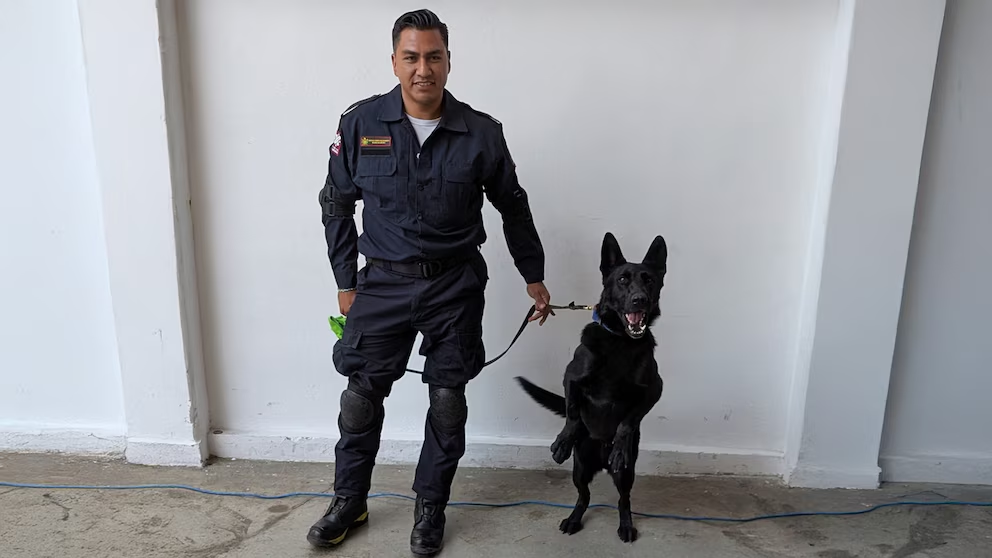
During the rescue efforts, Togo, a four-year-old German Shepherd who is part of the Mexico City Fire Department search unit, played a central role.
The rescue dog performed positive markings within the collapsed structure, signals that indicate the possible presence of people beneath the building’s remains. This information helped guide rescue teams and significantly narrow the search area for specialized crews.
According to Mexico City Fire Department Chief Juan Manuel Pérez Cova, the first marking occurred around 6:00 p.m. on Monday. A second positive marking was made later that night, allowing rescue teams to continue operations using specialized equipment and vertical access techniques through sections of concrete beams and slabs.
The dog’s intervention helped accelerate search efforts in a highly complex environment marked by unstable structures, debris and heavy construction materials.
🔵 Bomberos de la CDMX localizaron el segundo cuerpo tras el derrumbe del edificio en demolición en San Antonio Abad 124.
— Nuestras Noticias Morelos (@NNMorelos) March 10, 2026
El hallazgo fue posible gracias al perro rescatista Togo, informó Juan Manuel Pérez Cova.
Continúa la búsqueda del último trabajador atrapado. pic.twitter.com/bS73938OVF
The work of the canine team
In rescue operations, dogs do not work alone. They operate alongside their handler in what is known as a canine team, a unit based on coordination and constant communication between the dog and the rescuer.
In Togo’s case, the training process included months of preparation alongside firefighter Donovan Millán, with whom he developed the bond necessary to operate effectively in high-pressure emergency situations.
This training combines discipline, search exercises and simulated collapse scenarios so the dog can learn to detect human scent molecules even under layers of concrete, soil or steel.
Breeds commonly used in search and rescue
Emergency response teams around the world rely on specially trained dogs for search operations because of their sensory abilities and physical endurance.
Among the most commonly used breeds are:
German Shepherd, known for intelligence, discipline and strong learning ability.
Labrador Retriever, widely used for their exceptional sense of smell and balanced temperament.
Border Collie, considered one of the most intelligent dog breeds with a remarkable ability to focus.
Belgian Malinois, frequently used by security and rescue forces for their energy, agility and resilience.
These breeds possess characteristics that help them perform in demanding environments, although all require extensive specialized training.
Search capabilities
Togo’s preparation focused on detecting human scent in collapsed structures.
He can cover areas of up to 2,000 square meters and detect human scent at depths of up to 12 meters beneath rubble.
His training allows him to locate signs of human presence within minutes, which is crucial in emergency situations where time is a decisive factor.
Training exercises include simulated collapses, scent identification drills and work in multiple environments to ensure the dog can operate effectively in real emergency scenarios.
A critical resource in rescue operations
Search and rescue dogs are part of specialized units deployed during earthquakes, structural collapses, landslides and other disasters.
Their ability to detect human scent in complex environments makes them an indispensable tool for guiding rescue teams and accelerating search operations.
The incident on San Antonio Abad Avenue once again demonstrated the importance of maintaining these specialized units in major cities, as they can make a significant difference in emergencies where rapid response is essential.
Canine search teams continue to be one of the most effective resources in rescue and disaster response operations worldwide.