


The first country in the world to elect all its judges by popular vote. Critics claim that the elections will be influenced by mafia money and that voting for thousands of judges is very complex.

President Andrés Manuel López Obrador’s judicial reform makes Mexico the first country to elect all of its judges by popular vote.
This initiative was promoted in the context of a conflict between López Obrador and the Supreme Court, which has blocked laws that expanded state participation in the energy sector and handed over public security to the military.
Here are the key aspects of the constitutional reform, which was passed thanks to the ruling party’s large majorities obtained in the June 2 elections, where leftist Claudia Sheinbaum was elected president.
The central and most controversial part is the popular election of judges and justices, including those of the Supreme Court.
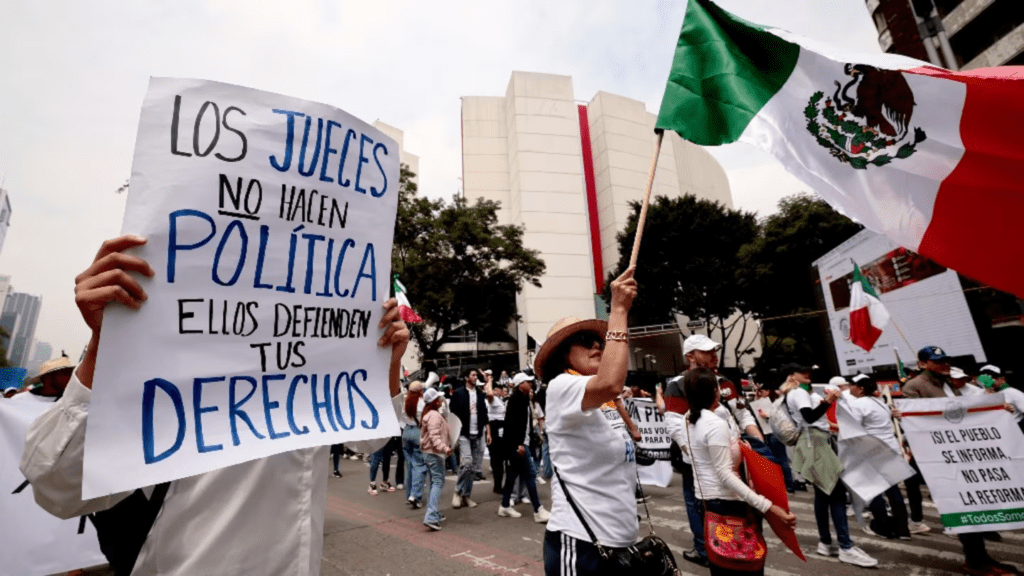
Extraordinary elections
Judges will be elected in extraordinary elections in 2025 and 2027, from candidates equally proposed by the Executive, Legislative, and Judicial branches.
Until now, Supreme Court members were proposed by the president and confirmed by the Senate, while the Federal Judiciary Council appointed judges and magistrates through exams and merit-based competitions.
López Obrador claims that the election is intended to rid the judiciary of corruption, but opposition parties, NGOs, and the United States argue that it undermines judicial independence and leaves judges vulnerable to influence from drug cartels, which already have sway in politics.
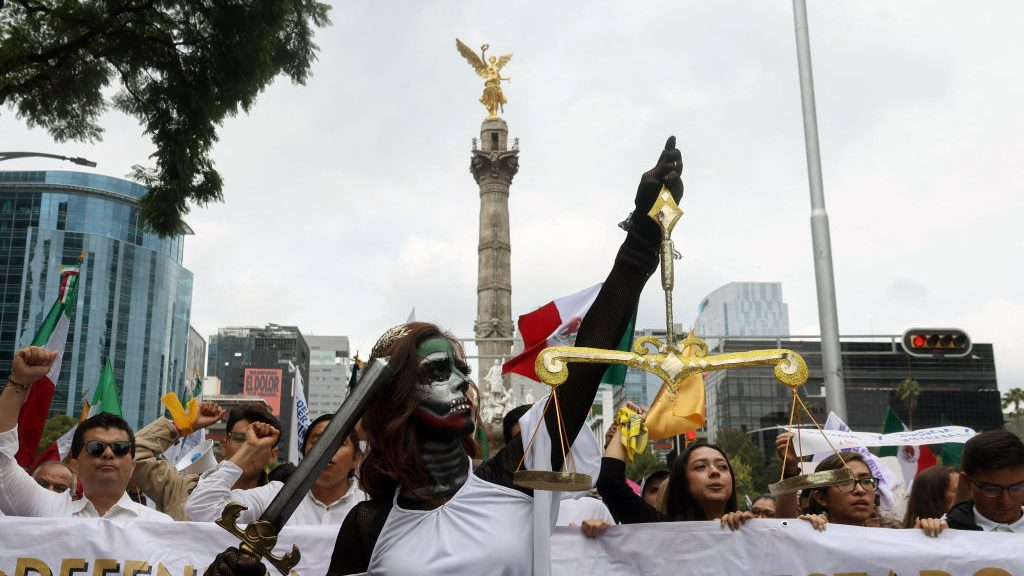
A unique case
The proposed election of around 1,600 federal judges and magistrates, as well as Supreme Court members, is unprecedented.
“There is no other country like this,” says Margaret Satterthwaite, the United Nations Special Rapporteur on the independence of judges and lawyers, who is critical of the project.
USA: only locals judgues
Although some states in the United States elect local judges, the case closest to Mexico’s is Bolivia, where high court magistrates are elected by popular vote. However, there, a judicial council appoints ordinary judges.
However, the independence of elected magistrates in Bolivia has been called into question amid disputes between President Luis Arce and his mentor and former socialist president Evo Morales (2006-2019).
Reduction of the Court
The reform reduces the number of Supreme Court justices from eleven to nine, while their term in office is shortened from 15 to 12 years.
It also eliminates the lifetime pension received by justices after completing their term and prohibits court members from earning more than the president, a measure that already exists but has not been enforced.
Judicial Discipline Court
The reform eliminates the Federal Judiciary Council, which managed and monitored the conduct of judicial officials, and orders the creation of an administrative body and a Judicial Discipline Court.
This court will evaluate and investigate the performance of judges, refer possible criminal cases to the Attorney General’s Office, and request political trials for judges before the Chamber of Deputies.
Mexico, the country of impunity
In Mexico, where about 80 homicides are committed daily, impunity exceeds 90%, according to the Supreme Court, which has pointed out the need to improve the capabilities of investigative bodies rather than promote a “demolition” of the judiciary.
Anonymous judges
The reform introduces the figure of “faceless” or anonymous judges to protect their safety and identity in cases against organized crime.
However, this figure is criticized by the UN High Commissioner for Human Rights in Mexico, as it prevents the public from assessing the judges’ qualifications and competence.
This measure has been applied in other countries in the region. In Colombia, it was adopted in the late 1980s to combat a wave of drug-related terrorism, though its effectiveness in protecting judges and ensuring justice was questioned.
In El Salvador, as part of the state of emergency promoted by President Nayib Bukele, authorities have been allowed to detain thousands of alleged gang members without a judicial warrant, who are then brought before anonymous judges who can extend their detention.
Human rights activists argue that many innocent people have been caught up in these raids.