

The world of work is undergoing a structural transformation that is no longer a distant forecast. It is already unfolding across industries, experience levels, and regions. Artificial intelligence, combined with automation and digitalization, is redefining how companies operate and how professionals build their careers.
For decades, the employment model was built on stability. People trained for a profession, entered a company, and followed a relatively predictable path. That model is rapidly losing relevance. Today, professional value is no longer defined by tenure, but by adaptability.
It is estimated that 65% of the skills required for today’s jobs will change before 2030. This is not just about speed, but depth. The transformation goes beyond learning new tools. It requires rethinking what it means to be prepared for work in the first place.
A New Phase of Digital Acceleration
In the United States, this shift is particularly visible in sectors such as technology, logistics, finance, and professional services. Companies are accelerating digital adoption to remain competitive, integrating AI into daily operations, decision-making, and customer experience.
This rapid transformation is creating both opportunity and tension. On one hand, new roles are emerging at an unprecedented pace. On the other, many workers feel their current skills are becoming outdated faster than they can adapt.
The gap between what companies need and what workers can offer is becoming one of the most critical labor challenges of the decade.
Artificial intelligence is at the center of this shift. Unlike previous technological waves, AI is not limited to automating manual tasks. It is increasingly capable of performing cognitive functions, including data analysis, content generation, pattern recognition, and decision support.
This does not eliminate human work, but it changes its nature.
Routine and repetitive tasks are more likely to be automated, while roles that require critical thinking, creativity, emotional intelligence, and judgment are gaining importance.

The Real Challenge Is Not AI — It’s Adaptation
The key challenge for workers is not competing against AI, but learning how to work alongside it.
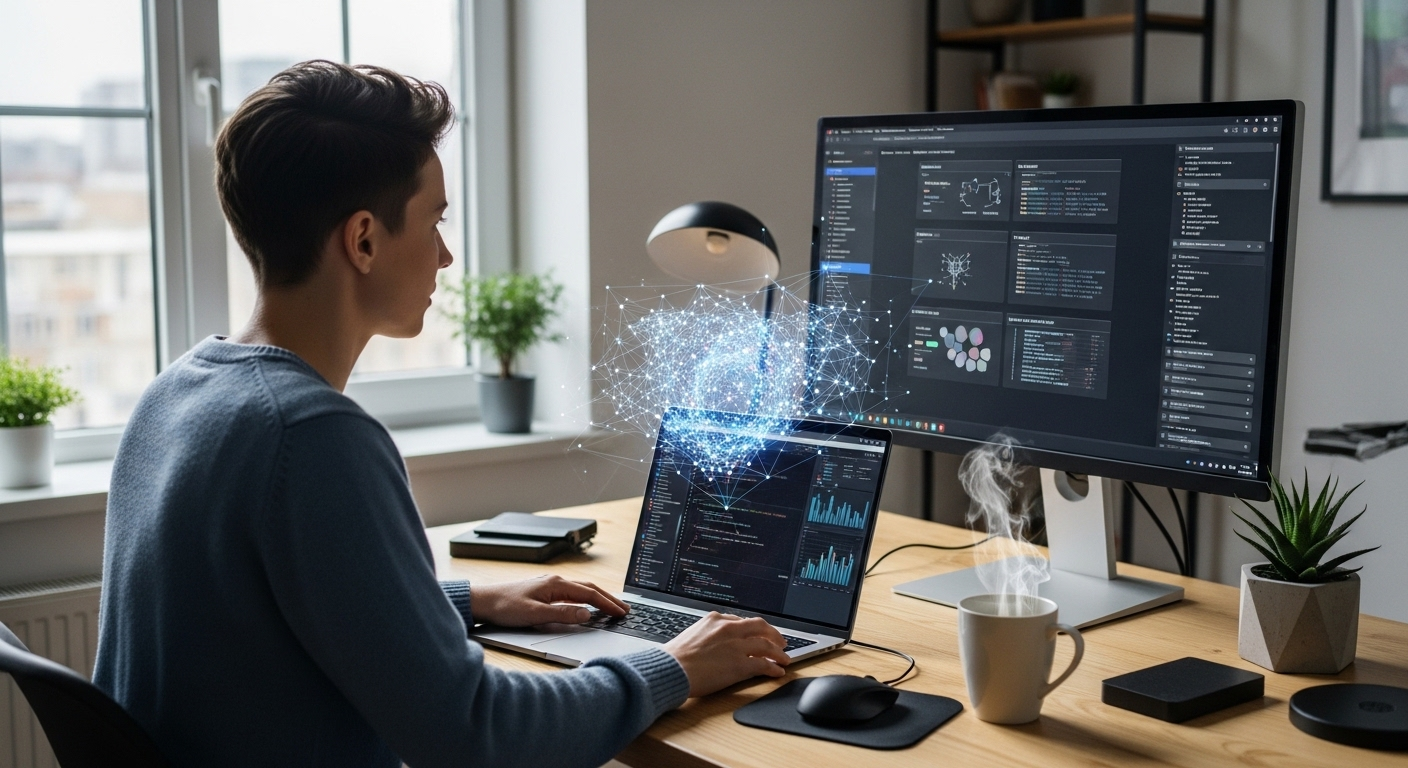
AI literacy is quickly becoming a baseline skill across industries. This is no longer limited to engineers or data scientists. Professionals in human resources, marketing, finance, healthcare, and logistics are integrating AI tools into their daily workflows.
Understanding how AI works, questioning its outputs, and applying it strategically are becoming essential capabilities.
At the same time, human skills are gaining renewed value. Communication, empathy, analytical thinking, and decision-making are increasingly critical in environments where technology handles a growing share of operational tasks.
This shift is redefining what “talent” means.
It is no longer enough to execute a specific task efficiently. Professionals must understand context, adapt to change, and contribute value beyond technical execution.
The Rise of Hybrid Profiles
One of the clearest trends in the U.S. labor market is the growing demand for hybrid professionals.
These are individuals who combine technical skills with business understanding and strong interpersonal abilities. They can bridge gaps between departments, translate data into strategy, and solve complex problems.
Examples are already widespread:
Marketing professionals who analyze data and use AI tools to optimize campaigns
Recruiters who leverage AI to improve hiring processes
Developers who understand product strategy and user behavior
These hybrid profiles are highly valued because they integrate multiple perspectives and adapt to evolving business needs.
Careers Are No Longer Linear
Another major shift is the end of the traditional linear career path.
The idea of choosing one profession and following it for decades is becoming less relevant. Instead, careers are becoming dynamic, with professionals changing roles, industries, and specializations multiple times throughout their lives.
This requires a fundamental change in mindset.
The key is no longer making the “right” career choice at the beginning, but developing the ability to continuously reinvent oneself.
This is where one of the most important skills of the future emerges: learning how to learn.
Continuous learning is no longer optional. It is a core professional requirement. The most competitive workers are not necessarily those who know the most, but those who can update their knowledge quickly and effectively.
Companies Must Also Transform
This transformation is not limited to individuals. Organizations must also evolve.
Hiring talent is no longer enough. Companies need to continuously develop their workforce. This includes investing in training programs, integrating technology into workflows, and redesigning leadership models.
More flexible organizational structures are becoming the norm, where learning and innovation are part of daily operations.
Hiring criteria are also shifting. Employers are placing greater emphasis on skills and potential rather than traditional experience. Adaptability, critical thinking, and learning capacity are increasingly valued over linear career paths.
A Global Opportunity — and a Competitive Pressure
One of the most significant impacts of this transformation is the globalization of work.
Remote work and digital platforms are allowing professionals to access opportunities beyond geographic boundaries. U.S. companies are increasingly hiring talent from across the world, while American workers are competing in a global marketplace.
This creates both opportunity and pressure.
For workers, it means access to a broader range of roles and income potential. For companies, it means access to diverse talent pools.
But it also raises the bar. Skills, productivity, and adaptability are being evaluated in a global context.
A Cultural Shift in How We Understand Work
The future of work is not determined by technology alone. It is shaped by how people and organizations respond to it.
This transformation represents a deep cultural shift.
It redefines what it means to work, how careers are built, and which skills matter most. Work is no longer a static structure. It is a dynamic process, driven by continuous learning, adaptation, and technological integration.
The change is already happening. It is not a possibility. It is a reality.
Those who adapt will find new opportunities for growth and development. Those who resist change may face increasing challenges in an increasingly competitive labor market.
In a world where knowledge becomes obsolete quickly, the ability to reinvent oneself is the most valuable professional asset.
Artificial intelligence will continue to evolve. But the real differentiator will not be the technology itself — it will be how people use it.
The new map of work is already drawn. The question is who is ready to navigate it.