

The 2026 FIFA World Cup will not only be the largest sporting event on the planet. It is already exposing a deeper transformation: how a global event can disrupt the way millions of people work.
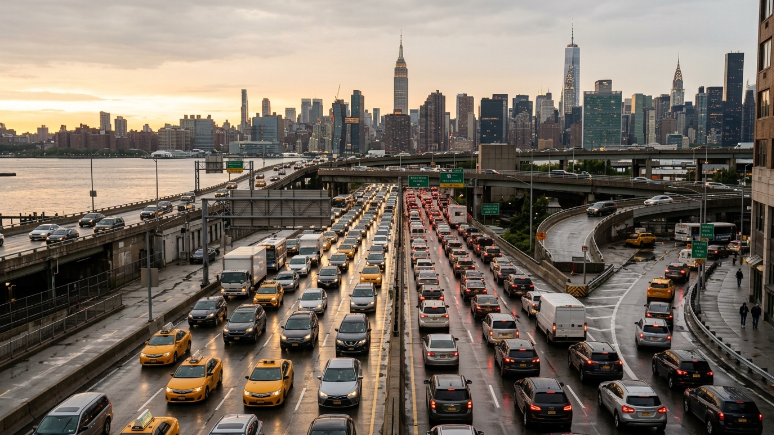
In the metropolitan area of New York City and New Jersey, authorities have issued an unusual recommendation. Workers who are not attending matches are being urged to stay home and work remotely during key days of the tournament.
This is not about workplace flexibility or employee perks. It is a direct response to a logistical challenge of historic scale.
An official warning as the city faces unprecedented pressure
Local governments, together with the Port Authority of New York and New Jersey and the transit operator NJ Transit, have released a formal advisory on what to expect during the summer of 2026.
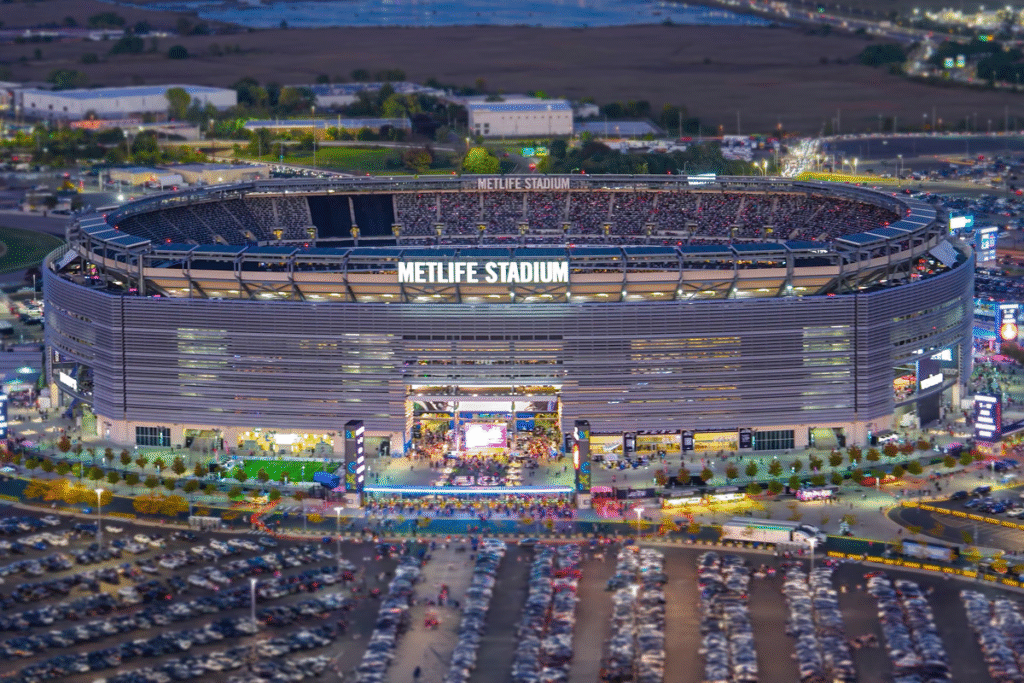
The issue is straightforward: massive crowds heading to the MetLife Stadium —which will host key matches, including the final— will generate demand far beyond the system’s normal capacity.
Large volumes of fans are expected to travel within narrow time windows that overlap with peak working hours. Without intervention, the transportation network could be pushed to its limits.
Authorities anticipate severe congestion in major transit hubs, heavy traffic on key highways, and significant strain on essential public services.
Restrictions, pricing and limits: a system under stress
To manage the situation, a series of measures will directly impact everyday mobility.
Rail service will be tightly controlled, with only 40,000 round-trip tickets available per match between Penn Station and the stadium. This is well below expected demand for an event of this magnitude.
In addition, special train fares will rise to $150 per ticket, representing an increase of more than 1,000% compared to regular pricing.
Operational restrictions will also apply. Access to certain station areas will be limited for several hours before and after each match, prioritizing ticket holders traveling to the event.
In practical terms, this means that thousands of daily commuters will face disruptions, delays, or the need to find alternative routes.
A clear message from authorities: stay home if you can
Against this backdrop, officials have delivered a direct message. The Port Authority’s executive director, Kathryn Garcia, made it clear:
If you are not attending the matches, the best option is to work from home, as the city is expected to experience extreme congestion.
This guidance reflects more than a precaution. It is a coordinated urban strategy aimed at keeping one of the world’s busiest metropolitan areas functioning under extraordinary pressure.
The World Cup as a catalyst for structural change
What is happening in New York and New Jersey highlights a broader reality. Major cities have physical limits, especially when faced with global-scale events.
When those limits are tested, traditional office-based work becomes vulnerable.
The 2026 World Cup is accelerating trends that were already underway:
The need for more flexible work models
The digitalization of operations
The decentralization of talent
Remote work is no longer a modern convenience. It is becoming a critical resilience tool.
Direct impact on businesses and operations
For companies, the implications are significant.
Organizations that rely heavily on physical presence may face operational risks during the tournament, including delays, absenteeism, and reduced productivity.
By contrast, businesses with distributed teams are better positioned to adapt. They can maintain continuity without depending on congested infrastructure or disrupted transit systems.
This advantage becomes especially valuable in high-impact scenarios like the World Cup, where external factors can quickly disrupt normal operations.
More than football: a signal about the future of work
The FIFA designed the 2026 World Cup as the most ambitious tournament in history. But its impact is already extending far beyond the sport itself.
It is reshaping how cities manage mobility.
It is forcing companies to rethink operational models.
And it is redefining how work fits into complex urban environments.
The conclusion is clear:
Work can no longer depend entirely on a fixed physical location.
When an entire city needs millions of people to stay home in order to function, the future of work is no longer theoretical—it is already happening.