



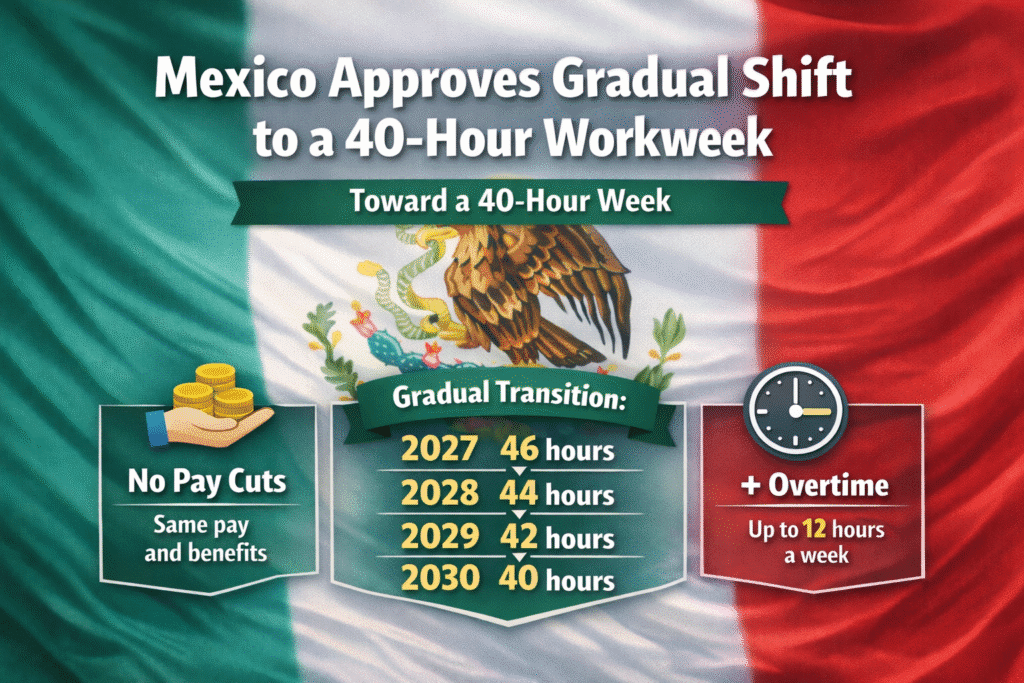
Mexico approved a gradual reduction of the workweek from 48 to 40 hours with no salary cuts. Implementation will begin in 2027 and is expected to reshape daily routines, rest time, and workplace organization for millions of people.
Working fewer hours per week while keeping the same pay. The idea has circulated for years in political, union, and business discussions. Now it is beginning to become reality in Mexico after the Senate approved the constitutional reform that sets a progressive path toward a 40-hour workweek.
The shift will not happen overnight. Instead, it will unfold gradually over the remainder of the decade. Still, the message is unmistakable: the country is preparing to adjust a historic structure that has defined for generations how time, employment, and productivity interact.
For people who wake up every day and head to work, the main question is straightforward: what will change in everyday life?

More available time, same pay
At the core of the reform is a guarantee that reducing working hours cannot mean lowering wages or cutting benefits. As weekly hours decline, salaries must remain intact.
This assurance was essential in building political agreement. In practical terms, it means millions of workers could gain additional time for family, rest, education, or leisure without weakening their purchasing power.
A timeline that will set the pace

The path toward a 40-hour week includes several intermediate stages.
Starting in 2027, the legal limit will fall to 46 hours. In 2028, it will drop to 44; in 2029, to 42; and by 2030, the full 40-hour standard will take effect.
During this period, companies and employees alike will need to adapt contracts, shifts, and performance expectations. For some industries, the adjustment may be manageable. For others, it could require a deep redesign of operations.
A country known for long work hours
One of the most frequently cited points during the legislative debate is that Mexico consistently ranks among the countries with the highest number of hours worked per year.
A significant share of workers already exceeds the current legal cap. Supporters of the reform argue that shorter weeks will bring Mexico closer to international labor practices that prioritize balance alongside productivity.
Days off: still an open debate
Many observers expected the Constitution to explicitly guarantee two days of rest for every five days worked. That language, however, was not included in the approved text.
For now, the existing system remains in place. Lawmakers indicated that the matter could be revisited later through secondary legislation that will regulate implementation details.
Overtime rules will also shift
While the regular workweek will shrink, the ceiling for overtime hours will increase. The new weekly limit will be 12 hours.
Some sectors view this as a necessary tool to handle demand peaks. Others believe it will require strict oversight to prevent extended overwork.
What supporters believe will happen
Advocates point to potential gains in health, lower fatigue, improved morale, and higher productivity per hour worked. Many specialists argue that shorter schedules can reduce mistakes and improve performance quality.
There is also the possibility that companies may need to hire additional staff to cover the hours no longer worked, potentially boosting formal employment.
The legislative journey is not over
After clearing the Senate, the reform must still pass through the Chamber of Deputies and receive approval from a majority of state legislatures. Only then will the official countdown toward the new framework begin.
Mexico has started to move the hands of its labor clock. The transition will be gradual and will involve negotiation and adjustment, but the destination is set: shorter workweeks and a profound rethinking of how time is divided between producing and living.
If the timeline holds, by the end of the decade daily routines for millions of workers will look very different.