

Why workforce strategies are becoming as critical as logistics in the new manufacturing map
As trade policy, tariffs, and geopolitical uncertainty continue to reshape global supply chains, nearshoring has emerged as a central strategy for U.S. companies seeking greater resilience, speed, and cost control. What began as a manufacturing and logistics decision is now transforming the labor market, creating a growing demand for cross-border, bilingual, and regionally aligned talent.
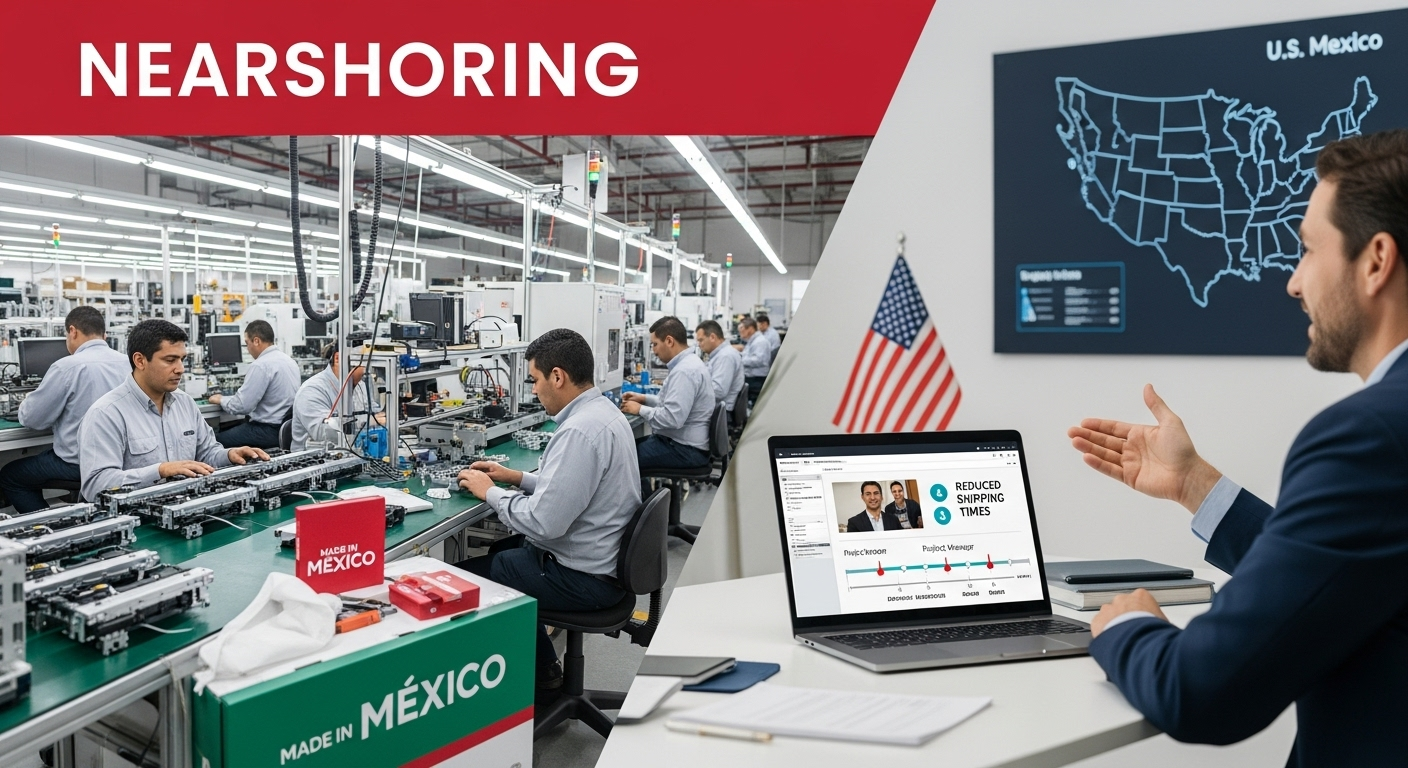
Nearshoring refers to relocating production and operational processes closer to the U.S. — primarily to Mexico and other parts of Latin America — rather than relying on distant overseas suppliers. While reshoring brings operations back to U.S. soil, nearshoring offers a hybrid model: geographic proximity without sacrificing cost efficiency.
According to industry analysts, these shifts are not instantaneous. Companies typically take three to five years to redesign supply chains, build facilities, and stabilize new operations. But once that transition is underway, the ripple effects extend far beyond freight volumes and warehouse capacity — they redefine how companies hire, manage, and scale their workforce.
From logistics strategy to talent strategy
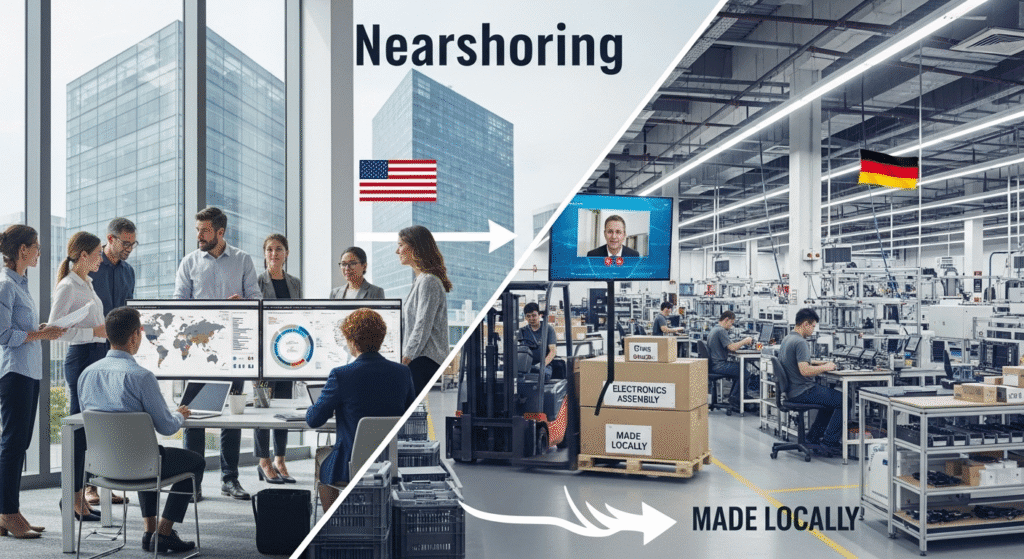
Nearshoring is no longer just about where products are made. It is about where operations are managed, where customer service is delivered, where IT support runs, and where back-office, finance, HR, and procurement functions are executed.
U.S. companies expanding into Mexico or Latin America increasingly need professionals who understand both markets, regulations, and business cultures. This includes roles in operations coordination, cross-border compliance, customer support, logistics planning, data analysis, finance, and supply chain management.
At the same time, domestic manufacturing growth in the U.S. — especially in the Southeast, Midwest, and Texas — is generating new internal demand for flexible, scalable teams that can support higher production volumes, faster distribution cycles, and more complex supplier networks.
Nearshoring is not only reshaping how goods move. It is reshaping how work is distributed.
Why the U.S. market is accelerating nearshoring
Several factors are pushing nearshoring to the center of U.S. business strategy:
• Tariff volatility and trade uncertainty
• Rising labor and transportation costs in Asia
• Pressure to reduce geopolitical risk
• Demand for faster time-to-market
• Federal and state incentives for domestic production
• Need for more transparent and traceable supply chains
Taken together, these forces are encouraging companies to build more regionalized ecosystems — where production, logistics, and support functions operate in closer alignment.
But this new model requires people who can work across borders, languages, and systems.
A new workforce model emerges
The nearshoring wave is driving demand for a new type of workforce: globally distributed but regionally specialized.
Instead of centralizing everything in one country, companies are now building hybrid teams. Engineering may be local. Customer service may be regional. Back-office operations may be remote. Data analysis may be offshore but timezone-aligned.
This model allows companies to scale faster, operate more efficiently, and reduce fixed costs — while maintaining continuity with U.S. business hours, regulations, and standards.
For U.S. employers, this means rethinking traditional hiring models. Talent is no longer limited by geography. What matters is skills, availability, alignment, and operational integration.
What this means for hiring in 2026 and beyond
Nearshoring is not a temporary trend. It is a structural shift.
As more companies relocate production closer to the U.S. and rebuild supply chains around North America, demand will continue to rise for:
• Bilingual and bicultural professionals
• Remote-ready operational teams
• Cross-border coordination specialists
• Supply chain analysts and planners
• Customer experience teams aligned with U.S. time zones
• Finance, HR, and admin professionals supporting multi-country operations
This is not just about saving costs. It is about building operational resilience.
How BajaStarTalent fits into this shift
BajaStarTalent was built for this exact moment.
As nearshoring accelerates, U.S. companies need access to reliable, highly skilled professionals in Latin America who can integrate seamlessly into their operations. The challenge is not finding talent — it is finding the right talent, properly vetted, trained, and ready to perform from day one.
Nearshoring is not only about moving factories. It is about rethinking how work itself is structured.
And that transformation is just beginning.