



Artificial intelligence is not only transforming employment; it is also generating new job opportunities, new professional profiles, and a growing demand for specialized skills.
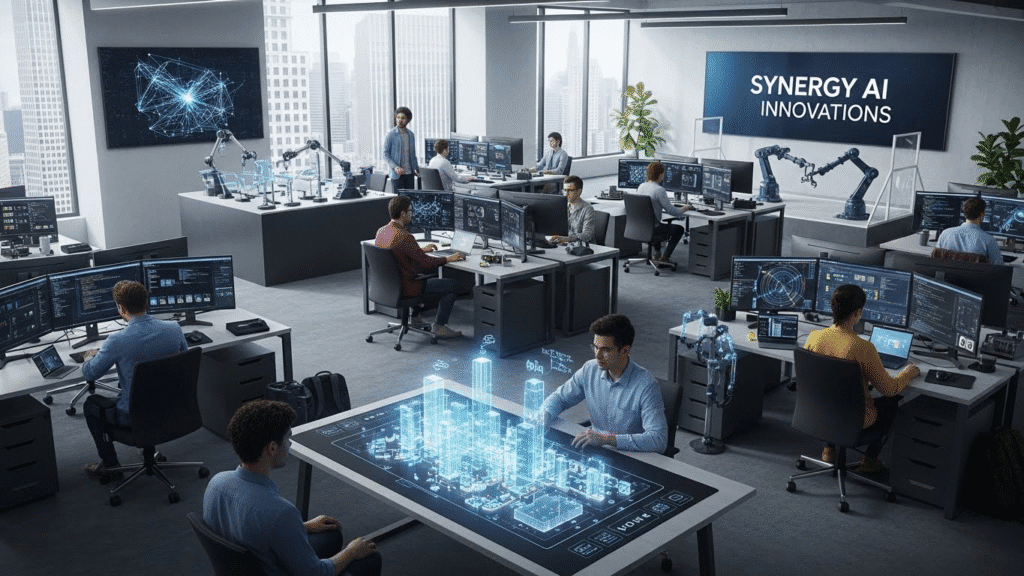
Over the past few years, artificial intelligence has become one of the most debated topics in the labor market. Much of the public conversation has focused on fears of automation, job losses, and the replacement of human labor. However, that partial perspective overlooks an equally important phenomenon: artificial intelligence is not just reshaping work—it is actively creating new career paths and expanding demand for highly specialized talent.
Far from triggering a massive and immediate destruction of jobs, AI is driving a reconfiguration of the labor market, particularly in sectors where technical knowledge, analytical capacity, and human interaction remain irreplaceable.
A Paradigm Shift, Not a Total Replacement
The history of work shows that every major technological advance has generated similar concerns. The same happened with industrial mechanization, computing, and the internet. In every case, some jobs disappeared, but new ones emerged—often better paid and with higher value added.
Artificial intelligence follows this same pattern. It automates repetitive, routine, or highly predictable tasks, but it also expands the scope of human work by freeing up time, improving efficiency, and allowing professionals to focus on strategic, creative, and decision-making activities.
Rather than fully replacing people, AI increasingly functions as a support tool—an assistant that enhances human capabilities.
Data Analysis: A Demand That Keeps Growing
One of the sectors most positively impacted by AI is data analysis. The ability to process massive volumes of information in real time has opened a vast job market for data analysts, data scientists, and business intelligence specialists.
Companies need people who not only know how to use AI-powered tools, but who can also interpret results, identify patterns, assess risks, and translate data into actionable decisions. This type of work requires human judgment, contextual understanding, and analytical thinking—skills that automation alone cannot replicate.
As a result, data-related roles rank among the most in-demand positions in the U.S. labor market, offering competitive salaries and strong long-term growth prospects.
Engineering and Development: AI as a Driver of Skilled Employment
Contrary to the idea that AI “programs itself,” the development, training, and maintenance of intelligent systems require a highly specialized human infrastructure. Software engineers, machine learning developers, cybersecurity specialists, and systems architects are increasingly essential.
Moreover, as AI becomes integrated across industries—healthcare, logistics, transportation, finance, and energy—hybrid roles are emerging that combine technical expertise with industry-specific knowledge. It is no longer just about coding, but about understanding how to apply technology to real-world problems.
This intersection between technology and industry is expanding the labor market for professionals with technical profiles and a commitment to continuous learning.
Automation That Creates Jobs, Not Eliminates Them
Another key aspect is intelligent automation. In many sectors, AI is taking over operational tasks to improve productivity—not to reduce headcount. This is especially visible in logistics, manufacturing, customer service, and administrative functions.
When processes are automated, companies often need:
- Automated systems supervisors
- Quality control specialists
- Process analysts
- Digital maintenance technicians
- Technology implementation managers
In other words, automation creates new roles around technology rather than eliminating the need for workers altogether.
New Opportunities for Remote and Global Work
The expansion of AI tools is also accelerating remote and distributed work, allowing U.S. companies to hire specialized talent without being restricted to a specific physical location.
This broadens opportunities for skilled professionals, lowers operating costs, and speeds up the adoption of more flexible work models. In this context, AI acts as an enabler of global employment rather than a barrier.
A Labor Market That Rewards Adaptability
The most positive impact of artificial intelligence is not the elimination of human work, but the renewed value placed on skills such as critical thinking, creativity, problem-solving, and the ability to learn.
The U.S. labor market is moving toward a model where:
- Repetitive tasks matter less
- Applied knowledge matters more
- Adaptability matters most
AI does not replace those who know how to use it; it replaces those who fail to adapt to it.
Looking Ahead With Perspective
Artificial intelligence is not an inevitable threat, but a powerful tool whose impact depends on how it is implemented. For workers, businesses, and governments alike, the challenge is not to slow down technology, but to support the transition through training, skills development, and new labor strategies.
Along that path, AI has the potential to become one of the strongest engines of skilled employment, productivity, and economic growth over the next decade.