

Life keeps reminding us that, both at work and in our personal lives, short-term planning is far more realistic than trusting grand forecasts. Time has once again confirmed that gurus do not exist.
Before 2025 even began, the world seemed determined to predict it. Astrology, technology, economics, spirituality, and prophecy all promised clear answers about what was coming next. It was framed as a turning point year — a moment of irreversible change that would redefine how we live, work, and relate to one another.
Now, with the year behind us, the conclusion is far less dramatic and far more familiar: many of those predictions never came true, and others unfolded in ways no one could have accurately foreseen.
Astrology and the promise of deep transformation
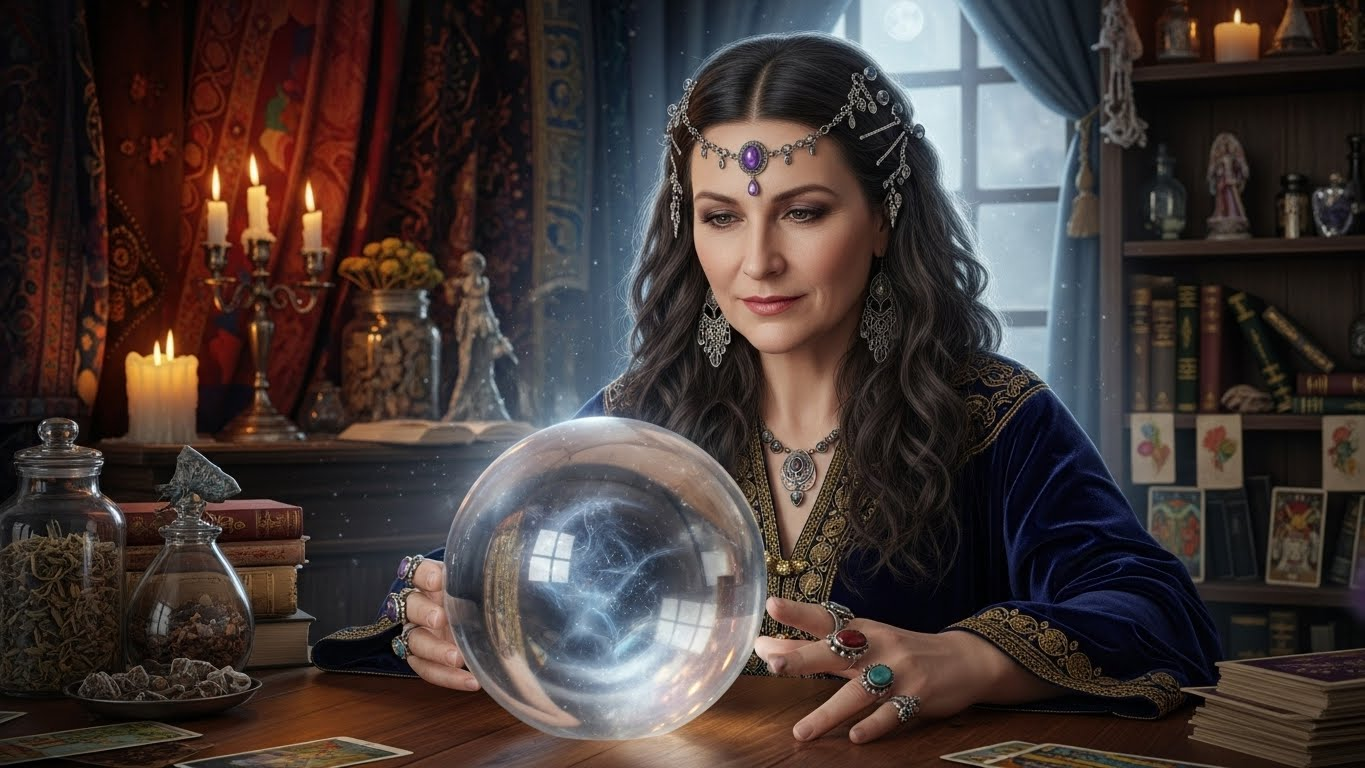
From an astrological perspective, major planetary movements involving Uranus, Neptune, and Pluto were said to signal profound collective transformation. Analysts spoke of:
- Leadership collapses
- Periods of confusion and emotional instability
- A symbolic phase of “moon and night,” associated with darkness and loss of direction
At the same time, these same predictions promised personal growth, awakening, and renewal. In reality, change did occur — but not according to celestial schedules or symbolic narratives. Events unfolded unevenly, shaped more by circumstance than by cosmic alignment.
Technology: progress without the miracle
Technology forecasts were equally ambitious. 2025 was supposed to deliver decisive breakthroughs, including:
- Massive expansion of solar energy
- The decline or disappearance of plastic, replaced by new materials
- Cancer treatments without side effects
- Cleaner, more efficient global systems
While innovation continued, it did so incrementally. No single year delivered the clean break or definitive solution that had been promised. Progress proved to be slower, more complex, and far less cinematic than predicted.
Apocalyptic warnings and media prophecies
Among the most striking predictions were announcements of imminent catastrophe. Psychic figures and viral videos gained attention by forecasting dramatic, world-ending events.
Among the most widely circulated claims, psychic Mohi repeatedly stated that a meteorite would strike Earth, triggering global consequences. The warning received significant media attention, generated fear in certain audiences, and reinforced the idea of 2025 as a year defined by extraordinary events. However, like many other high-impact prophecies, the year passed without that scenario ever materializing.
Similar claims included wars, economic collapse, mass migrations, and natural disasters attributed to interpretations of Nostradamus or Baba Vanga. As in previous years, ambiguous texts were retrofitted to current events, offering drama rather than clarity.
The workplace: where predictions fail first
Nowhere was the gap between prediction and reality more evident than in the world of work.
At the start of the year, confident forecasts declared:
- Entire professions would disappear
- One dominant work model would permanently replace all others
- Clear formulas for professional success would finally emerge
Instead, work remained what it has increasingly become: a space of constant adjustment. Companies and individuals made decisions week by week, responding to economic shifts, technological changes, and human limitations. Long-term certainty proved elusive, while adaptability became essential.
The real lesson of 2025
If 2025 taught anything, it was not how to predict the future — but how unrealistic that expectation is. In a world shaped by volatility, rapid change, and overlapping crises:
- Rigid planning loses value
- Short-term thinking gains relevance
- Flexibility becomes a core skill
The future does not belong to gurus
2025 did not validate grand prophecies or confirm the authority of self-proclaimed experts of the future. What it revealed instead is that neither personal life nor professional paths follow predetermined scripts.
The future does not emerge from predictions, charts, or viral forecasts. It takes shape through daily decisions, continuous adjustment, and the ability to navigate uncertainty.
If there is one certainty left, it is this: the future does not belong to gurus — it belongs to those who know how to adapt.